


Blog
How to Protect Wooden Furniture During Monsoon in India


Every year, as the first rains arrive and the air turns heavy with humidity, Indian homeowners face a familiar challenge, keeping their wooden furniture safe. The monsoon season, while a welcome relief from the summer heat, can be surprisingly harsh on wood. Moisture seeps into joints, surfaces swell, mildew creeps in, and before you know it, a beloved dining table or bed frame starts showing signs of damage.
The good news? With the right care routine and a little proactive attention, you can protect wooden furniture during monsoon and keep it looking beautiful for years. And if your furniture is crafted from quality solid wood, like Sheesham, it already has a natural advantage.
Why Monsoon Can Damage Wooden Furniture
Wood is a natural, porous material. It breathes, absorbing and releasing moisture depending on the environment. During India’s monsoon season, when relative humidity can climb above 80–90% in many cities, this natural behaviour becomes a liability.
Here’s what typically goes wrong:
- Moisture absorption and swelling: Wood fibres absorb airborne moisture, causing drawers to stick, doors to jam, and surfaces to warp.
- Warping and cracking: Repeated swelling and drying cycles stress the wood grain, leading to cracks or permanent distortion.
- Fungus and mildew buildup: Damp, poorly ventilated rooms create ideal conditions for mould and mildew to grow on and inside wooden furniture.
- Musty odours: Fungal growth and trapped moisture produce unpleasant smells that can be difficult to eliminate.
- Termite risk: Moisture-softened wood is far more attractive to termites, which can cause structural damage that’s often invisible until it’s severe.
Understanding these risks is the first step. The second is acting before the damage begins.
10 Practical Monsoon Furniture Care Tips for Wooden Furniture
1. Keep Furniture Away from Damp Walls and Windows
During heavy rains, walls can seep moisture, especially older construction. Move wooden furniture at least 3–4 inches away from exterior walls and keep it away from windows that may let in rain splatter. This simple step dramatically reduces moisture exposure.
2. Ensure Proper Room Ventilation
Stagnant, humid air is wood’s worst enemy. Keep rooms well-ventilated by running ceiling fans, using exhaust fans in kitchens and bathrooms, and opening windows during dry spells. Good airflow prevents moisture from settling on surfaces.
3. Use a Dehumidifier or Moisture Absorbers
In particularly humid rooms or closed spaces like bedrooms and storage areas, a dehumidifier can make a significant difference. Alternatively, silica gel packets or commercial moisture absorbers placed near furniture are an affordable option for smaller spaces.
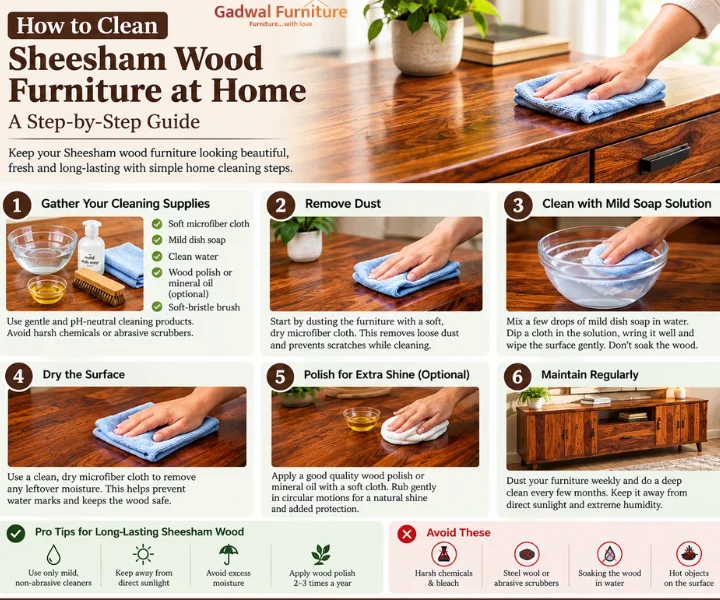
4. Wipe Surfaces Regularly with a Dry Cloth
Make it a habit to wipe down wooden surfaces with a soft, dry cloth every few days during the monsoon. This removes surface moisture before it has a chance to penetrate the wood. Avoid wet or damp cloths they add to the problem rather than solving it.
5. Apply Wood Polish or Protective Wax
A good quality wood polish or beeswax creates a protective barrier on the surface, slowing moisture absorption. Apply it before the monsoon begins and once mid-season if needed. This is one of the most effective wooden furniture maintenance tips for the rainy season.
6. Avoid Direct Contact with Wet Floors
Wet mopping during monsoon is common, but water pooling under furniture legs can cause swelling and staining. Use rubber or felt furniture pads under legs to elevate them slightly and protect the base from floor moisture.
7. Use Furniture Covers Wisely
Fabric covers can protect surfaces from dust and light moisture, but avoid wrapping furniture tightly in plastic sheets for extended periods. Plastic traps humidity inside, creating a warm, moist environment that accelerates mould growth and wood damage.
8. Inspect for Early Signs of Termites
Monsoon is peak season for termite activity. Check furniture joints, undersides, and legs for small mud tubes, hollow-sounding wood, or fine sawdust-like frass. Catching an infestation early can save your furniture. If detected, consult a professional pest control service promptly.
9. Never Place Hot or Wet Objects Directly on Wood
Hot cups, wet glasses, and damp plant pots left directly on wooden surfaces cause staining, ring marks, and localised swelling. Always use coasters, trivets, or trays, a small habit that preserves the finish significantly.
10. Address Minor Repairs Immediately
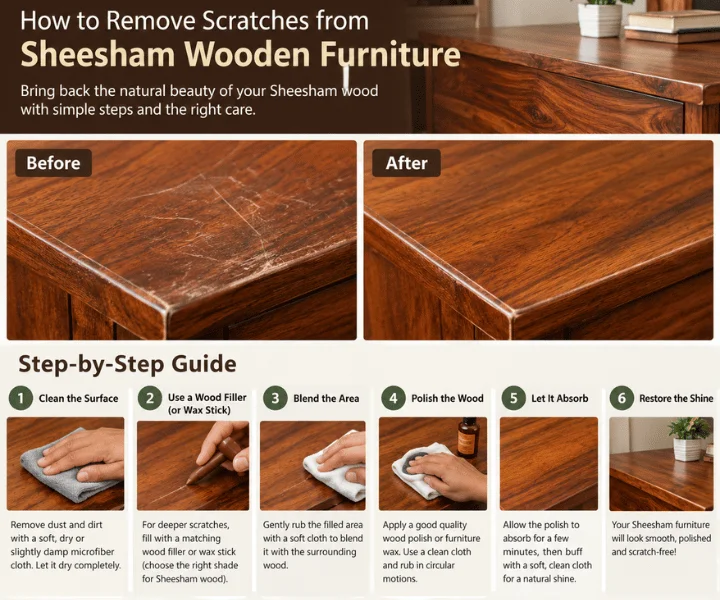
A small crack or a loose joint may seem minor, but during monsoon, moisture enters these gaps and accelerates damage rapidly. Fill cracks with wood filler and tighten loose joints before the rains set in. Don’t delay small repairs, they become expensive problems quickly.
Why Solid Sheesham Wood Performs Better in Indian Weather
Not all wood responds to humidity the same way. Engineered wood, MDF, and particle board, commonly used in budget furniture, are highly susceptible to moisture damage. They swell, delaminate, and deteriorate quickly in India’s humid climate.
Solid Sheesham wood (Indian Rosewood) is a different story entirely. Here’s why it’s considered one of the best woods for Indian weather:
- Dense grain structure: Sheesham’s tight, interlocked grain naturally resists moisture penetration better than softer or engineered alternatives.
- Natural oils: The wood contains natural oils that provide an inherent level of protection against humidity and pests.
- Dimensional stability: While no wood is completely immune to seasonal movement, Sheesham is significantly more stable than lower-grade materials, meaning less warping and swelling over time.
- Longevity: Solid Sheesham furniture, when properly maintained, lasts decades, making it a far better long-term investment than furniture that needs replacing every few years.
At Gadwal Furniture, every piece is handcrafted from premium solid Sheesham wood, chosen specifically for its durability in Indian climatic conditions. The result is furniture that doesn’t just look beautiful, it’s built to last through every season.
Common Mistakes to Avoid During Monsoon
- Covering furniture with plastic sheets: As mentioned, this traps humidity and worsens conditions rather than protecting the wood.
- Ignoring ventilation: Keeping rooms sealed to avoid rain coming in can cause humidity to build up indoors. Balance is key, ventilate during dry spells.
- Using too much water when cleaning: Wiping furniture with a wet cloth or mopping floors aggressively near wooden pieces introduces unnecessary moisture.
- Skipping the pre-monsoon polish: Many homeowners wait until damage appears before applying protective treatments. Applying polish before the rains begin is far more effective.
- Delaying minor repairs: Small issues compound quickly in humid conditions. Address them early.
Frequently Asked Questions
Can humidity damage wooden furniture?
Yes. High humidity causes wood to absorb moisture from the air, leading to swelling, warping, mould growth, and weakened joints. Prolonged exposure without proper care can cause permanent structural damage to wooden furniture.
How do I prevent fungus on wooden furniture during monsoon?
Ensure good room ventilation, wipe surfaces regularly with a dry cloth, apply a protective wood polish, and use a dehumidifier in enclosed spaces. Avoid covering furniture with plastic, which traps moisture and encourages mould growth.
Is Sheesham wood good for Indian weather?
Yes — Sheesham (Indian Rosewood) is widely regarded as one of the best solid woods for Indian climatic conditions. Its dense grain, natural oils, and dimensional stability make it more resistant to humidity, pests, and seasonal changes compared to engineered wood alternatives.
How often should I polish wooden furniture during monsoon?
Ideally, apply a quality wood polish or protective wax once before the monsoon season begins and once mid-season if the humidity in your area is particularly high. Regular polishing maintains the protective barrier on the wood surface.
How do I prevent termite damage in wooden furniture during monsoon?
Inspect furniture regularly for early signs — mud tubes, hollow sounds, or fine dust near joints. Keep furniture dry and away from damp walls. Consider a professional anti-termite treatment for your home before the monsoon season, especially if you’ve had previous infestations.
Conclusion: Protect Your Furniture, Protect Your Investment
Learning how to protect wooden furniture during monsoon isn’t complicated — it’s mostly about consistency and a few smart habits. Keep surfaces dry, ensure ventilation, apply protective polish, and stay alert to early signs of damage. These steps, done regularly, make a significant difference over the life of your furniture.
And if you’re thinking about new furniture, consider it an opportunity to invest wisely. Solid Sheesham wood furniture — like the handcrafted collections at Gadwal Furniture, is designed to handle India’s demanding climate with grace. Built from premium solid wood, finished with care, and crafted to last, it’s furniture that rewards proper maintenance with decades of beauty and function.
Explore Gadwal Furniture’s solid Sheesham wood collections and find pieces built for the long term, through every monsoon and beyond.
For more info, contact: support@gadwalfurniture.com
Follow our Instagram : Gadwal Furniture












One thought on “How to Protect Wooden Furniture During Monsoon in India”