Blog
Cane vs Rattan vs Wood Furniture: Which Is Best for Your Home?

If you’ve been furniture shopping lately, you’ve probably seen “cane,” “rattan,” and “wood” thrown around like they’re interchangeable. They’re not. And honestly, most listings don’t bother explaining the difference, which is annoying if you’re trying to figure out what you’re actually paying for.
So let’s clear it up properly.
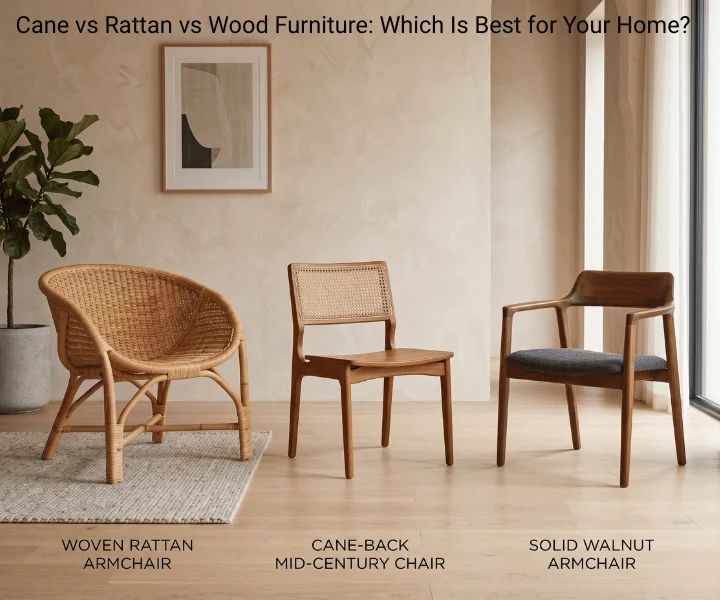
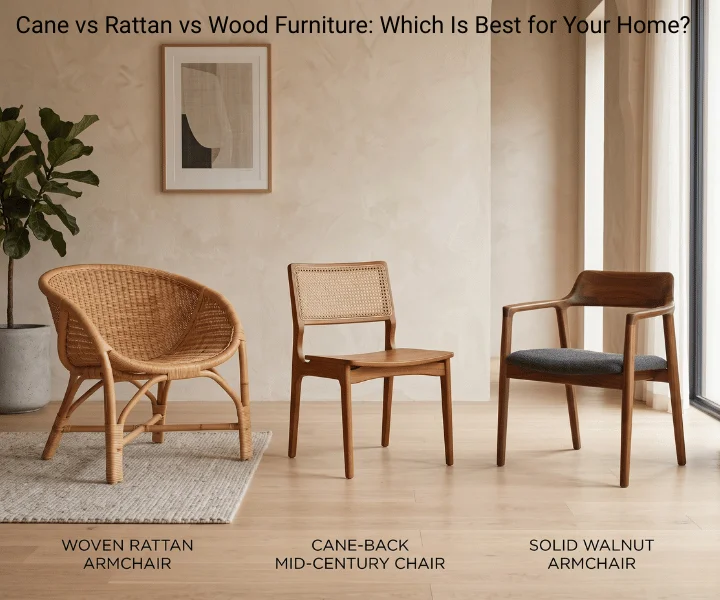
Cane is the smooth outer skin of the rattan vine, peeled off and used for weaving into that classic open, woven pattern you see on chair backs and headboards.
Rattan is the entire vine, cane comes from it, but rattan itself is also used whole, bent and shaped into frames, curves, and structural pieces.
Wood is a completely different material altogether: it’s solid timber, cut from a tree trunk, used for frames, legs, tabletops, and anything that needs to bear real weight.
In other words, cane is a part of rattan, and rattan and wood are two entirely different plants doing two different jobs.
Cane: The Weaving Material
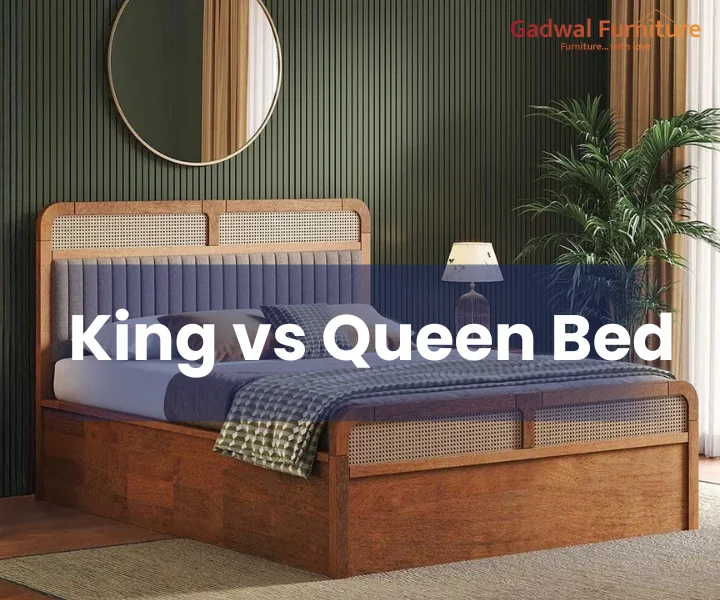
Cane comes from the rattan palm, but specifically it’s the glossy outer layer that gets stripped off and woven. You’ve seen it, that open lattice pattern on the backs of dining chairs, headboards, or cabinet door panels. It’s flexible, lightweight, and lets air flow through, which is genuinely useful in Indian summers when a solid, closed-back chair can get uncomfortable fast.
The catch: cane on its own isn’t structural. It can’t hold up a bed frame or support the legs of a table. It’s decorative and functional in a specific way, texture, breathability, visual lightness, but it always needs something else doing the heavy lifting underneath it.
Rattan: The Whole Vine, Doing More Work
Rattan is the vine cane comes from, but when people say “rattan furniture,” they usually mean pieces where the whole vine, not just the peeled skin, has been used. Rattan is naturally flexible when heated, which is why you see it bent into curved chair frames, rounded headboards, and those woven basket-style accent chairs.
Rattan is tougher than cane alone because you’re working with more of the plant’s actual fiber, not just the surface layer. But it’s still a natural fiber, and in a country with the humidity swings India has, rattan furniture without any wood reinforcement can loosen, sag, or develop weak joints faster than you’d want for a piece you’re planning to keep for years.
Wood: The Structural Backbone
Wood is in a different category entirely, it’s not woven, it’s not a vine, it’s solid timber. This is what actually carries weight: bed frames, table legs, wardrobe structures, chair frames. A well-built solid wood piece, properly joined, is simply built to last in a way woven natural fibers on their own aren’t.
This is also where the wood species matters. Sheesham, for instance, is dense and naturally resistant to termites and warping, which is a big part of why it’s such a common choice for Indian homes specifically, it’s built for the climate, not just imported because it looks nice.
So Which One Should You Actually Buy?
Here’s the thing most guides skip: it’s rarely a straight choice between the three. The best furniture usually combines them, a solid wood frame doing the structural work, with cane or rattan detailing where you want that lighter, breathable texture. You get the durability of wood where it counts, and the character of cane or rattan where it adds something.
| Material | Best for | Watch out for |
|---|---|---|
| Cane | Chair backs, headboard panels, decorative detailing | Not structural on its own; can fray with rough use |
| Rattan | Curved frames, accent chairs, woven storage pieces | Needs reinforcement for anything load-bearing |
| Solid Wood | Bed frames, tables, wardrobes, anything weight-bearing | Choose a dense, climate-suited species like Sheesham |
If you’re buying a full piece, a bed, a dining set , a storage unit, check what’s actually holding it together underneath the woven surface. That’s the real durability question, not just what the visible material is.
A Quick Word on Why This Matters More in India
Indian homes deal with a wider swing of humidity, heat, and monsoon dampness than a lot of the markets where “cane furniture” trends originally took off. A cane or rattan piece that looks great in a showroom photo can behave very differently after a few monsoon seasons if there’s no solid wood structure backing it up. This is one of those details that’s easy to miss when you’re comparing pieces online and can’t actually touch or test them.
Where Gadwal Fits Into This
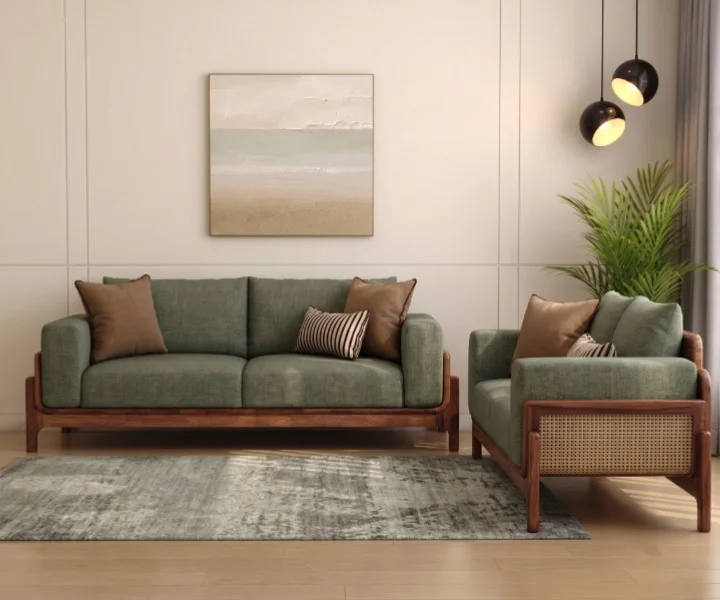
We’ve been building solid Sheesham wood furniture out of our own factory for years, which is really the reason we’re comfortable explaining this distinction as plainly as we have, we’ve seen what holds up in real Indian homes and what doesn’t. Our SCANE collection is built exactly on the principle above: solid Sheesham wood frames doing the structural work, with cane and rattan detailing layered in for texture, rather than relying on cane or rattan alone to hold a piece together.
Every piece is inspected and finished at our own manufacturing facility, backed by a lifetime termite and borer warranty on the wood, and available with free pan-India shipping and custom sizing if you need a piece to fit a specific space. You can also see and feel the material difference in person, we run five showrooms across India if you’d rather not decide on a screen.
FAQs
Is cane furniture the same as rattan furniture?
Not quite. Cane is the outer bark of the rattan vine used for weaving, while rattan refers to the whole vine, which can be woven or bent into structural shapes. Cane is technically a part of rattan.
Is rattan furniture durable?
It’s reasonably durable for accent pieces and light use, but rattan without a wood structure underneath tends to wear faster than solid wood, especially in humid Indian climates.
Can cane furniture get damaged by humidity?
Yes, prolonged exposure to excess moisture and monsoon dampness can affect natural cane over time, especially if it is kept in poorly ventilated or damp areas. That’s why the construction of the furniture matters too. Gadwal; Furniture’s cane pieces combine natural cane detailing with solid wood construction, making them a practical and stylish option for Indian homes. With good ventilation, protection from direct rain, and regular care, cane furniture can remain beautiful and functional through the seasons.
Is wood furniture better than cane or rattan?
For anything load-bearing, beds, tables, wardrobes, yes, solid wood is the stronger choice. Cane and rattan work best as decorative or textural elements layered onto a solid wood frame, not as a standalone structural material.
Which wood is best paired with cane or rattan detailing?
Sheesham is a common and reliable choice for Indian homes since it’s naturally dense, termite-resistant, and suited to local climate conditions, making it a solid structural base for cane or rattan detailing.
How do I know if a “cane furniture” piece is actually well-built?
Check what’s underneath the visible weave. If the frame, legs, and joints are solid wood rather than thin cane or rattan alone, the piece will hold up significantly longer.
For more info, contact: support@gadwalfurniture.com
Follow our Instagram : Gadwal Furniture