Blog
10 Things to Check Before Buying a Sofa Set or Sofa (That Most People Skip)


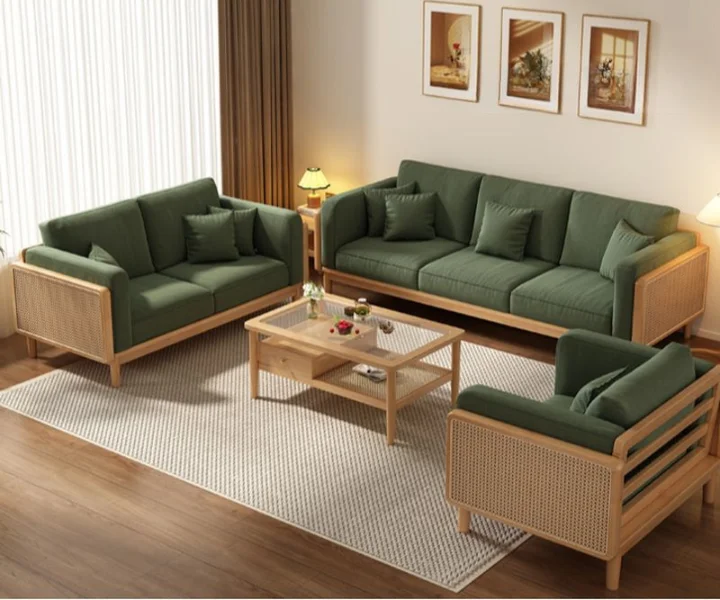
Buying a sofa can be simple at first when you follow proper guidance. But one wrong choice can cause daily problems. Knowing how to choose a sofa helps avoid costly mistakes. Your sofa must fit your room and daily needs. It should feel good when you sit for long hours. It should also match your room’s overall look. Many buyers check only the sofa design and price. They often skip size, fabric, frame, and delivery checks. These small checks can make a big difference later. This sofa buying checklist guide explains ten important points to consider. Use these tips before choosing your next sofa.
1. The Room Decides First, You Decide Second
Before comparing sofa designs, decide what the room can realistically accommodate.
Measure the available wall length, the depth you can spare, and the height around windows, shelves, switches, or other fixed features. Then account for circulation. As a practical starting point, leave roughly 90 cm of walking space around the main furniture pathways and around 40 cm between the sofa and coffee table where the layout permits.
This immediately narrows your choices.
A large three-seater might look impressive online but overwhelm a compact living room. Conversely, a small two-seater can look lost in a large open-plan space.
Think of sofa selection as a room-planning exercise rather than a catalogue exercise.
Check these measurements before shopping:
- Available sofa length
- Maximum sofa depth
- Ceiling and window clearances
- Walking space around the sofa
- Space between sofa and coffee table
- Position of doors, switches, radiators, vents, and other fixed elements
- Space needed for additional chairs or a side table
The right sofa should make the room easier to use—not force everyone to walk around it.
2. Read the Room Before Reading Reviews
Reviews can tell you whether other buyers liked a sofa. They cannot tell you whether that sofa is right for your room.
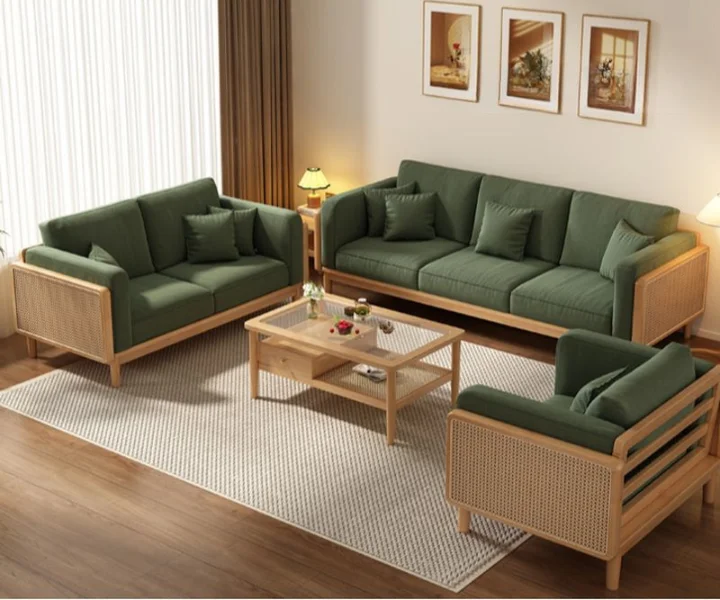
Start with your room’s existing colours, lighting, flooring, curtains, rugs, and furniture. Then decide whether the sofa should blend in or become an accent.
A dark sofa can stand out beautifully against a pale wall, while a neutral sofa can help balance a room with a dark feature wall or colourful décor.
Don’t trust showroom lighting completely. Warm commercial lighting can make a fabric look very different from how it will appear at home.
If possible, get a fabric swatch and view it at different times of day under your home’s actual lighting.
Your sofa colour should work with the room you have—not the room shown in the product photograph.
3. Measure the Route, Not Just the Room
This is one of the most commonly skipped sofa buying tips.
A sofa can fit perfectly into your living room and still never make it inside the house.
Measure the entire delivery route:
- Main entrance and front door
- Building entrance
- Lift door and interior
- Stairwell
- Corridors
- Sharp hallway turns
- Doorways inside the home
- Any narrow passages or gates
Check the door width and space needed to tilt the sofa. For large sofas, ask the seller for packed and ready-to-use sizes.
4. Check the Sofa Frame and Joinery
The upholstery is what you see. The frame is what you’re buying underneath it.
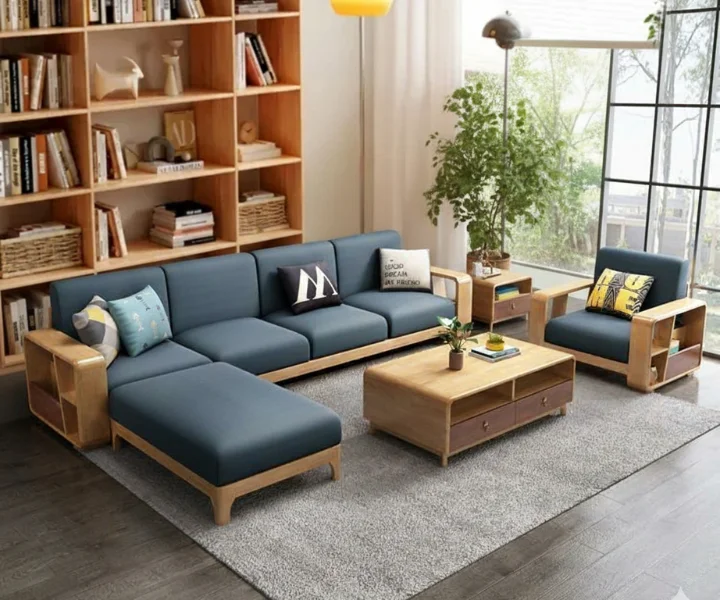
For a long-lasting sofa, look for a strong frame made from suitable hardwood, quality solid wood, or appropriately engineered metal construction. Kiln-dried hardwood is commonly preferred because controlled drying reduces the risk of excessive movement caused by moisture changes.
The way the frame is assembled matters too.
Look for:
- Strong corner support
- Secure frame joints
- Fixed corner blocks
- Dowel joints where suitable
- Mortise-and-tenon joints where suitable
- Clear frame material details
- A useful frame warranty
Be cautious when a seller cannot explain what the internal frame is made from.
A low price is less attractive if the frame begins loosening while the upholstery still looks new.
5. Get the Seat Depth and Height Right
A sofa can have excellent construction and still be uncomfortable if its proportions don’t suit you.
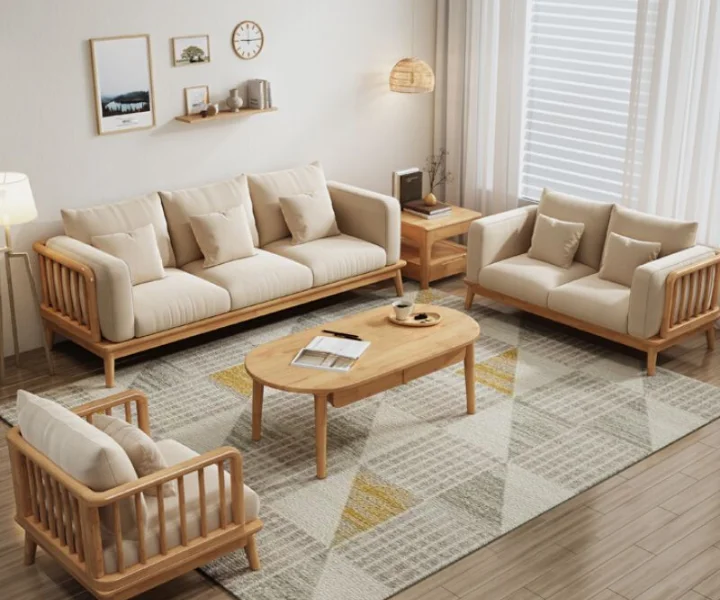
Sofa seat depth
Seat depth determines how upright or relaxed you sit.
A relatively shallow seat generally encourages a more upright sitting position. A deeper seat allows you to curl up, lounge, or sit with your legs tucked in.
As a broad starting point, 50–55 cm of usable seat depth suits many upright seating arrangements, while deeper “cloud” or lounge-style sofas can extend considerably beyond that.
Don’t confuse total sofa depth with usable seat depth. Thick back cushions can reduce the space you actually sit on.

Sofa seat height
Seat height affects how easily you sit down and stand up.
Around 44–48 cm is a useful general reference range, but the right height depends on the people using the sofa, cushion compression, and personal preference.
If older family members will use the sofa frequently, avoid choosing an extremely low seat simply because the design is fashionable.
The best sofa is one you can comfortably sit on, get up from, and use for an hour or two—not one that only looks comfortable in a photograph.
6. Look Inside the Cushions
Cushion construction has a major effect on how a sofa feels after months of use.
High-resilience foam can provide a good combination of support and shape retention. Softer feather or down-filled cushions can feel exceptionally plush but generally require more regular fluffing and maintenance.
Ask these questions before buying:
- What filling does the seat use?
- What foam density does it have?
- Does it use high-resilience foam?
- Can you reverse the cushions?
- Can you remove the cushion covers?
- Can you buy replacement covers?
- Can you replace the cushion filling?
Don’t judge cushion quality by firmness alone.
A very firm sofa isn’t automatically better, and an extremely soft sofa isn’t necessarily more comfortable. What matters is whether the cushioning provides the support you need and maintains that support over time.
If the seller provides foam-density information, use it to compare products rather than relying solely on phrases such as “premium foam.”
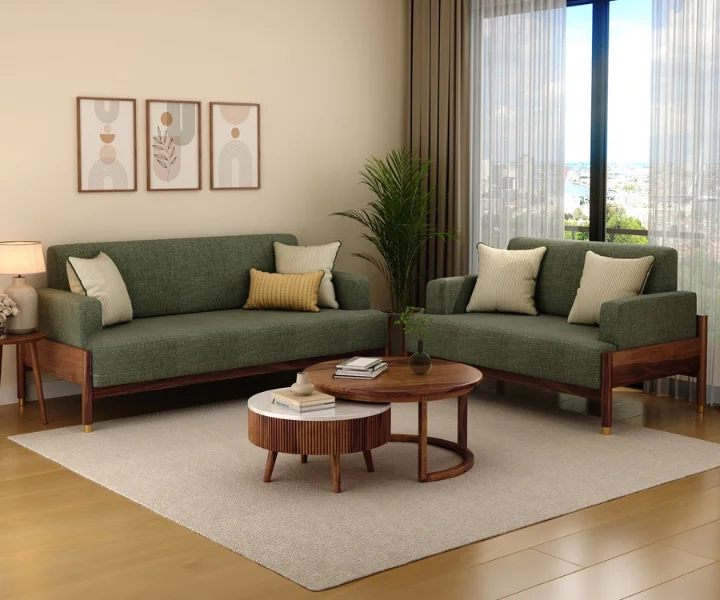
7. Choose Sofa Fabric for Your Lifestyle
There is no universally best sofa material. The best material depends on how you live.
A formal living room that gets occasional use has very different requirements from a family room used every day by children, pets, and guests.
Common options include:
- Velvet: Soft and visually rich, but can show dust, marks, and directional changes in the pile.
- Linen: Natural-looking and breathable, but can wrinkle and may require more care.
- Leather: Durable and relatively easy to wipe, although it can feel warm or sticky in hot weather.
- Leatherette: Can offer a leather-like appearance at a lower cost, but quality and long-term durability vary considerably.
- Microfibre: Generally practical and easy-care, depending on the specific fabric construction.
- Performance fabrics: Designed to offer improved resistance to staining, wear, or everyday household use.
For busy households, don’t ask only, “Does this fabric look good?”
Ask, “How will this fabric behave in my home?”
If the manufacturer provides a Martindale or rub-count rating, use it as one comparison point for upholstery durability. A rating around 25,000 cycles or more is often used as a benchmark for regular domestic upholstery, while higher ratings can be useful for heavier-use households. However, the test result should not be treated as a guarantee of real-world lifespan.
8. Don’t Ignore Arms, Legs, and Modular Connectors
Small design details can have surprisingly large practical consequences.
Arm style
Wide arms can be comfortable for resting your head or placing a cushion against them. But they also consume valuable width.
If your room is small, slim arms can give you more usable seating without increasing the sofa’s overall footprint.
Leg height
Low legs give a heavier, grounded appearance and can reduce the visible space underneath the sofa.
Taller legs create a lighter visual profile and can make cleaning underneath easier. They may also provide enough clearance for some robot vacuums.
Modular connectors
If you’re buying a sectional or modular sofa, check the connectors.
The pieces should lock securely enough that they don’t gradually separate as people sit down, stand up, or move around.
A beautiful modular sofa that constantly shifts apart is a daily annoyance.
9. Ask the Questions Nobody Asks the Salesperson
Before placing the order, ask questions that go beyond colour and price.
Questions About Sofa Construction
- What material does the sofa frame use?
- How are the frame joints made?
- What warranty covers the frame?
- What foam type does the sofa use?
- What foam density does it have?
- Can the cushion filling get replaced?
Questions About Sofa Fabric
- What exact fabric does the sofa use?
- What is its rub or Martindale rating?
- Can I get a fabric sample?
- Can the covers come off?
- Can I wash the covers?
- Can replacement covers be bought later?
Questions About Sofa Delivery
- What are the packed sofa dimensions?
- Will it fit through my lift?
- Will it fit through my staircase?
- Does delivery reach inside my home?
- Does assembly come with the order?
- What happens if the sofa cannot enter my home?
Questions About Warranty and Service
- What does the warranty cover?
- What happens if the sofa arrives damaged?
- What is the return policy?
- What is the refund policy?
- Who handles future service requests?
If a seller is reluctant to answer basic construction and warranty questions, consider that a warning sign.
10. The One Number That Matters Most
The most useful number isn’t always the sofa price.
It is the total cost of ownership.
A ₹60,000 sofa isn’t necessarily cheaper than a ₹75,000 sofa if the first requires early cushion replacement, has poor after-sales support, or comes with expensive delivery and assembly charges.
Before comparing prices, calculate:
Sofa cost + delivery + assembly + accessories + potential maintenance/replacement costs
Then compare warranties and expected durability.
Also check whether the advertised price excludes delivery, installation, premium fabric upgrades, or other charges.
The cheapest sofa isn’t necessarily the best value. The goal is to find the sofa that gives you the right combination of comfort, durability, appearance, service, and price.
The Space Around Your Sofa Matters
Leave a minimum of 90 cm between your sofa and the opposite wall, coffee table, or piece of furniture facing it. This is enough space in the room for easy walking around the sofa.
Most living rooms in Indian apartments are tighter than people realise. A 3-metre-wide room with a 90 cm deep sofa against one wall and a 40 cm deep TV unit against the other leaves exactly 170 cm – enough for a coffee table and circulation, but barely. Every additional centimetre of sofa depth or TV unit depth eats into that number.
Measure the clearance before you decide on sofa depth. Not after.
The 15-Point Sofa Buying Checklist
Save this list before you visit a showroom or place an online order.
Structure and frame
- Frame material — Check whether it uses solid wood, suitable hardwood, engineered construction, or metal. Don’t assume every type of “wood” has the same performance.
- Frame warranty — Check the length and exact terms of the warranty.
- Joinery method — Ask how the frame is joined and reinforced.
Foam and comfort
- Foam density — Request the actual specification where available rather than relying on “premium” or “high-density” marketing language.
- Seat depth — Measure usable seat depth, not just the sofa’s total depth.
- Seat height — Check whether the finished seat height works for the people who will use it.
Fabric and upholstery
- Fabric type and performance — Understand how the selected sofa fabric performs in your household and climate.
- Rub count/Martindale score — Use the rating as one durability comparison point where it is provided.
- Fabric sample availability — Request a swatch and check it under your home’s lighting.
Dimensions and access
- Exact dimensions verified — Record length, width/depth, and height before ordering.
- Delivery access checked — Measure doors, lifts, staircases, corridors, and tight turns.
Delivery and after-sales
- Delivery terms — Confirm whether delivery is to the door, inside the home, or kerbside, and whether assembly is included.
- Return and refund policy — Understand what happens if the product arrives damaged or has a manufacturing defect.
- Production lead time — Confirm whether the sofa is ready stock or made to order.
- After-sales support — Make sure there is a clear contact channel for warranty and service issues.
Final Thoughts
Knowing how to choose a sofa set or sofa takes some planning. Check the size, comfort, material, colour, design, and price. Also check the frame, fabric, seat depth, and delivery route. These simple sofa buying tips can prevent costly mistakes. The best sofa should suit both your room and lifestyle. Choose comfort and quality instead of looks alone.
Frequently Asked Questions
1. What is the best sofa material for long use?
Good leather can last for many years with proper care. Good performance fabric also works well for busy homes. Frame and cushion quality matter too.
2. How do I choose between a 2-seater and 3-seater sofa?
Choose based on your room size and seating needs. A 2-seater suits smaller rooms, while a 3-seater offers more seating space.
3. Is it better to buy a sofa online or in-store?
Both options can work well. Online shopping gives more choices, while stores let you test the sofa’s comfort, seat depth, height, and fabric.
4. How can I make sure my sofa fits through doors?
Measure all doors, lifts, stairs, and hallways first. Also ask the seller for the sofa’s packaged dimensions before ordering.
5. Which sofa is best for a small living room?
Choose a sofa with a compact size and slim arms. Shallow depth and raised legs can also help save space.
6. What sofa buying mistakes should I avoid?
Avoid measuring only your living room. Check the delivery route, frame, comfort, sofa fabric, warranty, and return policy before buying.
6. What can make a sofa uncomfortable after purchase?
Wrong seat depth or seat height can cause discomfort. Poor back support and unsuitable cushions can also make sitting less comfortable.
7. How can I avoid overspending when buying a sofa?
Set a total budget before shopping. Include delivery, assembly, fabric upgrades, and other extra costs in your sofa price.
8. How can I tell if a sofa is poor quality?
Look for unclear frame details, weak joinery, and poor cushion information. A weak warranty and poor after-sales support are also warning signs.
9. Can the wrong sofa design affect a room’s look?
Yes, sofa design can change the whole room. A large sofa may crowd a small room, while a small sofa may look lost in a large room.
For more info, contact: support@gadwalfurniture.com
Follow our Instagram : Gadwal Furniture