


Blog
Best Home Office Furniture for Work From Home in India (2026 Guide)

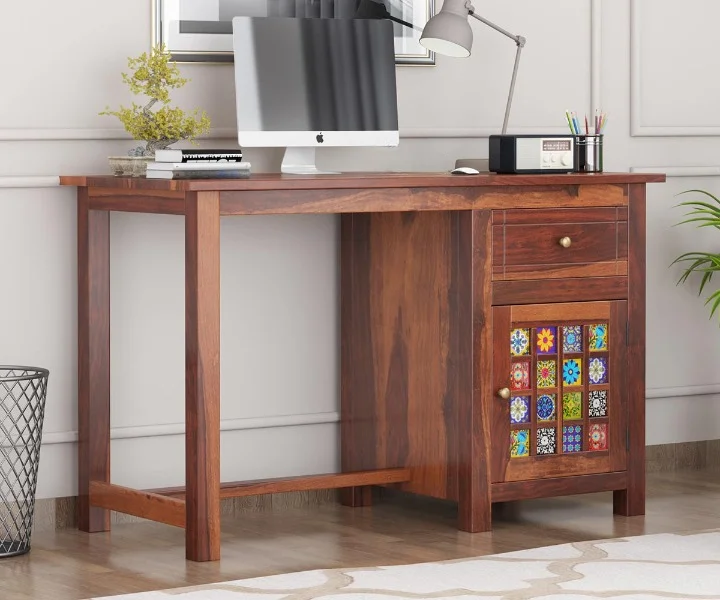
If you’ve been working from your dining table or perched on the edge of your bed with a laptop balanced on your knees, you already know why this matters. Work from home isn’t a temporary phase anymore for most Indian professionals, it’s just how a lot of us work now, at least a few days a week. And the furniture you’re using either makes that easier or it quietly wrecks your back, your focus, and your sleep.
The good news is that setting up a proper home office in India doesn’t have to mean an expensive corporate-style makeover. A few well-chosen pieces, a sturdy desk, a chair that actually supports you, some smart storage, go a long way. Here’s a practical breakdown of what you actually need, and what to look for when you’re buying.
Start With the Desk — It’s the Foundation of Everything
Your desk decides your posture, your workflow, and honestly, your mood for the day. A wobbly table that’s too low or too shallow will have you hunching within an hour.
A few things worth checking before you buy a study table:
Height and legroom — Standard desk height in India works out to around 28–30 inches, but if you’re tall, look for slightly higher options.
Surface space — You need room for a laptop, a second monitor if you use one, a notepad, and a coffee mug without everything sliding off the edge.
Storage built in — Drawers for cables, chargers, files, and the random stationery that always ends up in a pile.
Material — This is where a lot of people go wrong. Engineered wood or MDF desks look fine in photos but tend to warp or chip within a couple of years, especially in India’s humidity swings.
This is really where solid wood earns its price tag. Sheesham wood, in particular, handles moisture and temperature changes far better than particle board, and it doesn’t develop that hollow, flimsy feel over time.
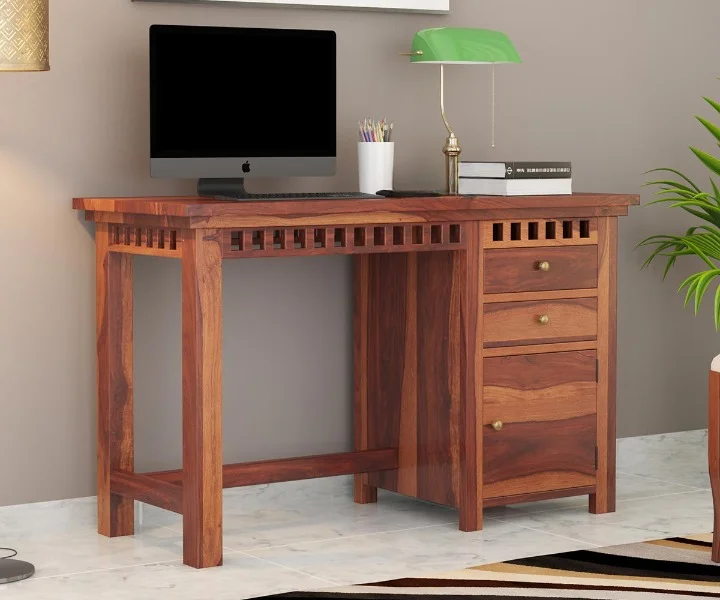
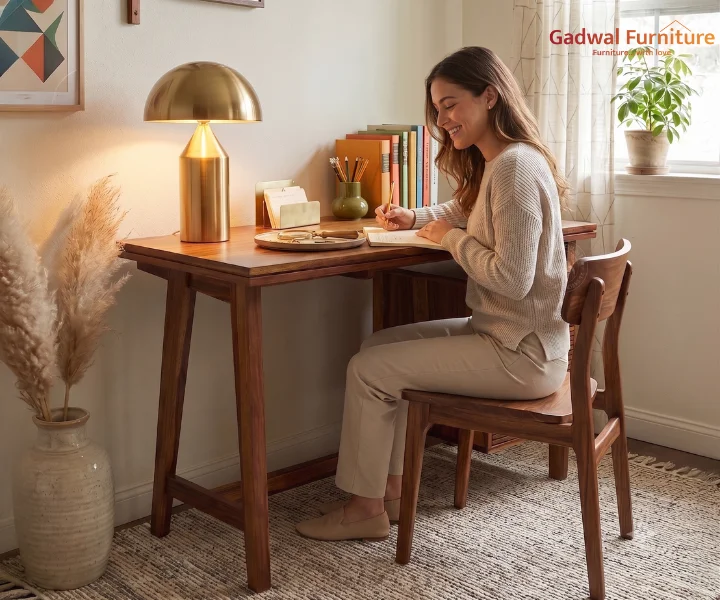
Our pick: The Aayushi Sheesham Wood Study Table is a solid all-rounder, enough surface area for a dual-monitor setup, two drawers for storage, and a compact enough footprint that it works in a spare bedroom corner or a proper home office alike.
The Chair Matters More Than People Think
Most WFH back pain complaints trace back to one thing: sitting in a dining chair or a plastic stool for eight hours a day. A dedicated office chair doesn’t need to be a fancy ergonomic mesh setup with fifteen adjustment levers, but it does need proper back support, a seat height that keeps your feet flat on the floor, and armrests that don’t dig into your elbows.
Wooden chairs with cushioned upholstery are a good middle ground for people who don’t want the “corporate office” look at home but still need real support for long calls and deep-focus work blocks.
Our pick: The Solid Wood Study Chair pairs a solid Sheesham wood frame with a cushioned seat and backrest, so it holds up to daily use without feeling like you’re sitting on a dining chair borrowed from the kitchen.
Bookshelves: Function First, Then Aesthetics
Working from home usually means your work life spills into your living space, which means files, reference books, notebooks, and random cables need somewhere to live that isn’t the floor. A bookshelf does double duty here, it’s storage, but it’s also one of the easiest ways to make a home office corner actually look designed rather than improvised.
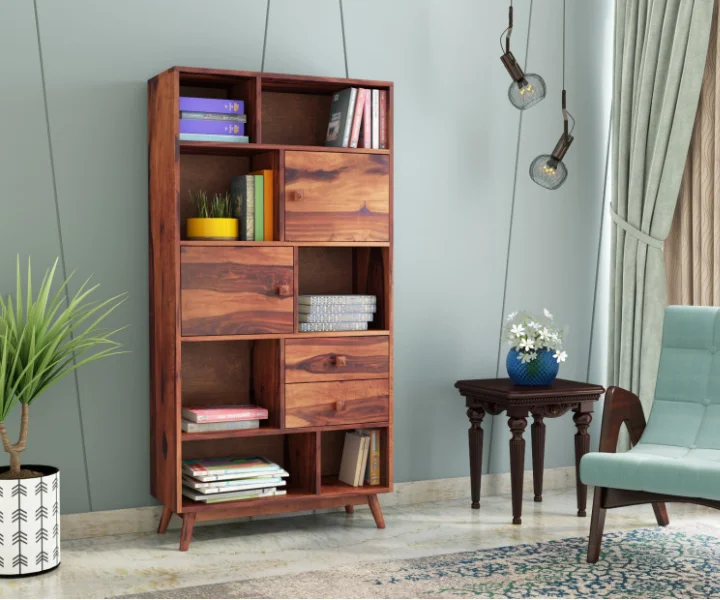
Open shelving works well if you want quick access to things you use daily. Bookcases with glass doors are better if you want to keep dust off documents or display items while still hiding the clutter behind a clean front.
Our pick: The Solid Wood Busk Bookshelf gives you generous shelving with a protected, tidy look, genuinely useful if your home office doubles as a reading nook or a spot where guests can see it.
Don’t Forget the Conference Table (Yes, Even at Home)
This one surprises people, but if you regularly host small client meetings, family business discussions, or need a proper spot for video calls with more than one person in frame, a conference table is worth considering, especially for consultants, freelancers, or small business owners running things out of a home office. It doesn’t need to be a boardroom-sized slab; a compact 4–6 seater solid wood table works fine for most home setups and looks a lot more professional on camera than a kitchen table with a fruit bowl pushed to one side.
Lighting Changes Everything
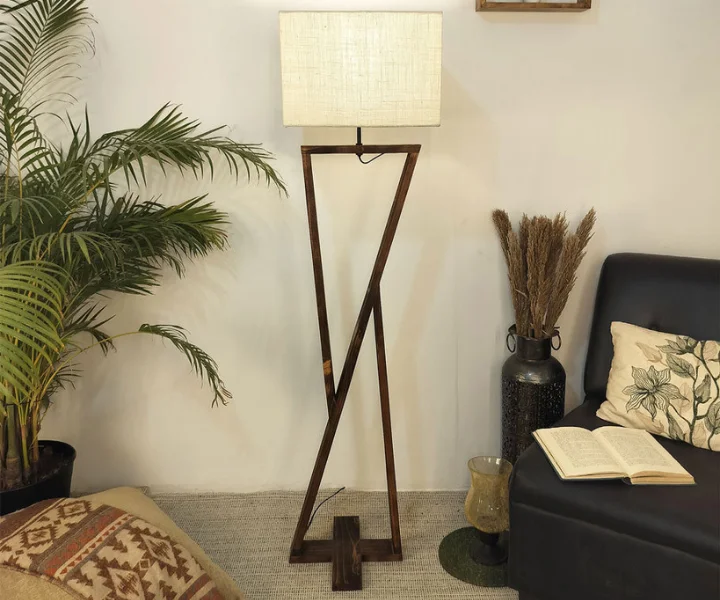
Bad lighting is one of the most underrated WFH problems. Overhead tube lights create glare on screens, and natural light alone isn’t reliable once the sun moves or the day gets cloudy. A good Floor Lamp placed to the side of your desk reduces eye strain during long hours and makes video calls look noticeably better too, something freelancers and consultants especially notice.
Warm white light in the 5000K–7000K range is generally easier on the eyes for extended screen work than harsh cool white lighting.
Storage Units: Where Everything Else Goes
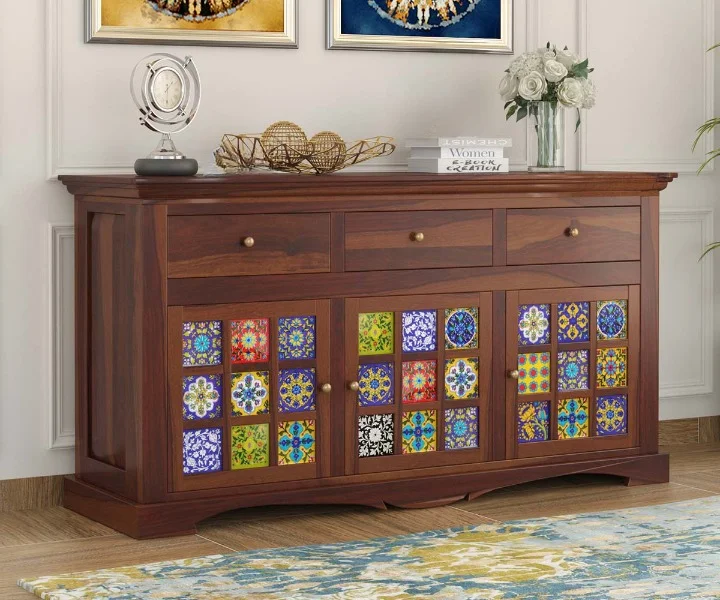
Once the desk, chair, shelf, and lamp are sorted, you’ll still end up with things that don’t have a home, old files, chargers, printer paper, backup hard drives. This is where dedicated storage units come in. Chest of drawers, cabinets, and multipurpose storage boxes keep your workspace from slowly turning into a dumping ground, which matters more than it sounds like when you’re spending eight hours a day looking at the same corner of your house.
Why Solid Wood Actually Matters Here
A quick note on why we keep coming back to solid wood through this whole list: home office furniture gets used every single day, for years, not occasionally like a guest room bed. Cheaper engineered wood options tend to sag, chip at the edges, or swell in humid months, and replacing a desk or chair every couple of years costs more in the long run than buying once, properly.
At Gadwal Furniture, everything across our study and office range is built from 100% solid Sheesham wood, backed by a lifetime termite warranty, so you’re not gambling on durability. We also offer free pan-India shipping, custom sizing if your room has an odd layout, and factory-direct pricing, since we cut out the middleman markup that a lot of furniture brands build into their prices. You can browse our full curated collection on the WFH Spaces page to see how these pieces work together as a set.
Putting It All Together
You don’t need to buy everything on this list at once. Start with the two pieces that affect you daily the most, the desk and the chair, and build outward from there as your setup and budget allow. A well-thought-out home office isn’t about looking impressive on a video call (though it helps); it’s about giving yourself a space that actually supports focused work, day after day, without wrecking your posture or your patience in the process.
Frequently Asked Questions
What is the best material for home office furniture in India?
Solid wood, particularly Sheesham, holds up best against India’s humidity and temperature swings compared to engineered wood or MDF, which tend to warp or chip over a few years.
Do I need a separate office chair, or can I use a regular dining chair?
A dedicated office chair with proper back support is worth the investment if you’re working more than a couple of hours a day, dining chairs aren’t built for extended sitting and are a common cause of WFH back pain.
How much desk space do I actually need for WFH?
Enough for your laptop or monitor, a notepad, and a little breathing room, most people are comfortable with a desk between 40–48 inches wide, though this depends on your setup and whether you use a second monitor.
Is solid wood furniture more expensive than engineered wood?
Upfront, sometimes slightly, but it lasts significantly longer without warping, sagging, or needing replacement, which usually makes it the better value over time.
Best Home Office Furniture
For more info, contact: support@gadwalfurniture.com
Follow our Instagram : Gadwal Furniture








One thought on “Best Home Office Furniture for Work From Home in India (2026 Guide)”