Blog
Space Saving Bedroom Furniture: Smart Ideas for Small Rooms

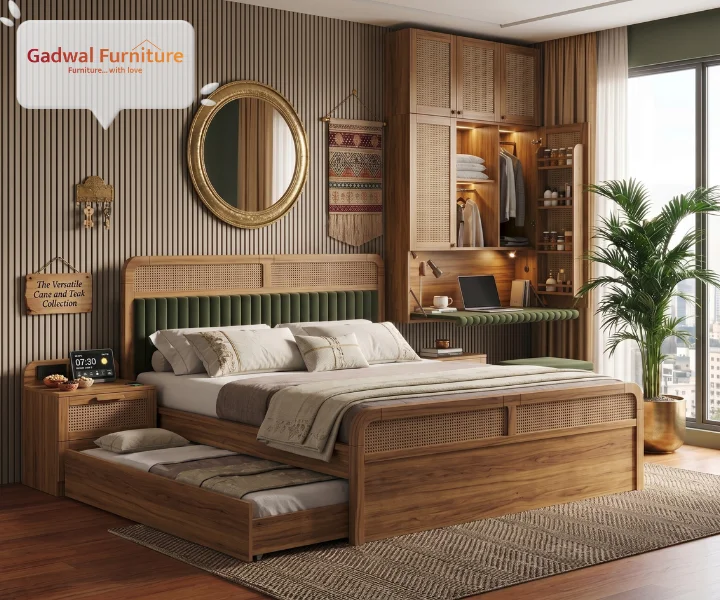
Small bedrooms need smart planning rather than more furniture. A crowded room quickly loses walking space, storage becomes difficult to manage, and even simple daily routines start feeling uncomfortable. The right space saving bedroom furniture helps solve these problems by combining useful storage with a practical footprint.
Indian bedrooms often have limited floor area, particularly in compact 2 and 3 BHK homes. A 10×10 ft bedroom gives around 100 sq ft of floor space, leaving limited room once the bed, wardrobe and bedside furniture are placed.
This guide focuses on furniture choices that offer better storage while keeping valuable floor space available.
First, how big is a “small” Indian bedroom, really?
A compact bedroom commonly measures around 100 to 120 sq ft, while larger bedrooms in standard apartments often sit between 120 and 150 sq ft. The exact dimensions vary across homes, yet the furniture requirements remain fairly similar.
The bed usually takes the largest footprint. The wardrobe follows closely, especially if it has hinged doors that need additional clearance. Bedside tables, dressers and storage cabinets then consume the remaining floor area.
That makes furniture design especially important. Choosing space saving furniture for bedroom layouts allows homeowners to use vertical and hidden storage instead of adding more floor-standing pieces.
How we measured “space-saving” (methodology)
Space efficiency depends on more than the physical size of furniture. Storage capacity, opening clearance and usable floor area all influence the final result.
A simple comparison can be made by looking at:
Space Efficiency = Usable storage capacity ÷ Floor space occupied
This approach gives a practical way to compare a regular bed with a storage bed or a hinged wardrobe with a sliding wardrobe.
For example, a standard bed may occupy around 38.5 sq ft. Adding a separate chest of drawers increases the total footprint. A storage bed uses almost the same bed footprint while adding storage beneath the mattress.
Measurements vary according to design, material, internal compartments and custom dimensions. Solid wood furniture from Gadwal Furniture can also be tailored to suit room dimensions, making it easier to plan furniture around available space.
The Space Efficiency Index: furniture compared
| Furniture setup | Floor space consumed | Usable storage capacity | Space Efficiency Index |
| Standard bed + separate chest of drawers | ~42 sq ft | ~8 cu ft | 0.19 |
| Hydraulic/box storage bed (same bed footprint) | ~38.5 sq ft | ~28 cu ft | 0.73 |
| Standard bedside table | ~2.25 sq ft | ~1 cu ft | 0.42 |
| Wall-mounted floating bedside shelf | ~0 sq ft (wall-mounted) | ~0.5 cu ft | Floor-neutral |
| Hinged 3-door wardrobe (incl. door-swing zone) | ~30 sq ft | ~55 cu ft | 1.82 |
| Sliding-door wardrobe, same width | ~13 sq ft | ~59 cu ft | 4.55 |
These figures highlight two useful choices for compact bedrooms. A hydraulic storage bed adds substantial hidden storage without requiring a separate cabinet. A sliding wardrobe reduces the clearance needed in front of the wardrobe, leaving more usable movement space.
The single biggest space-saving decision in a small bedroom isn’t the bed at all, it’s the wardrobe door mechanism. Swapping a hinged wardrobe for a sliding one at the same width reclaims roughly 17 sq ft of floor space, because there’s no swing clearance to protect. In a 100 sq ft bedroom, that’s close to a sixth of the entire room.
Storage beds vs. a bed + separate chest of drawers
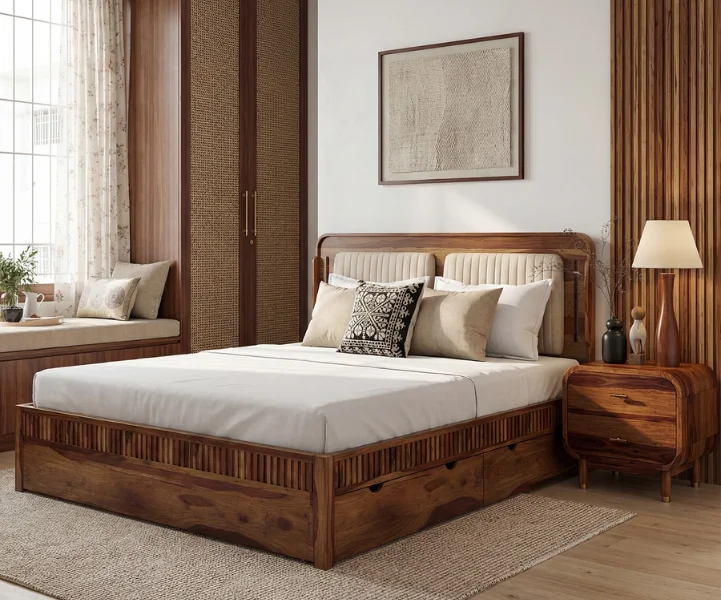
Storage beds work particularly well in bedrooms with limited floor space. The area underneath the mattress becomes useful storage instead of remaining unused.
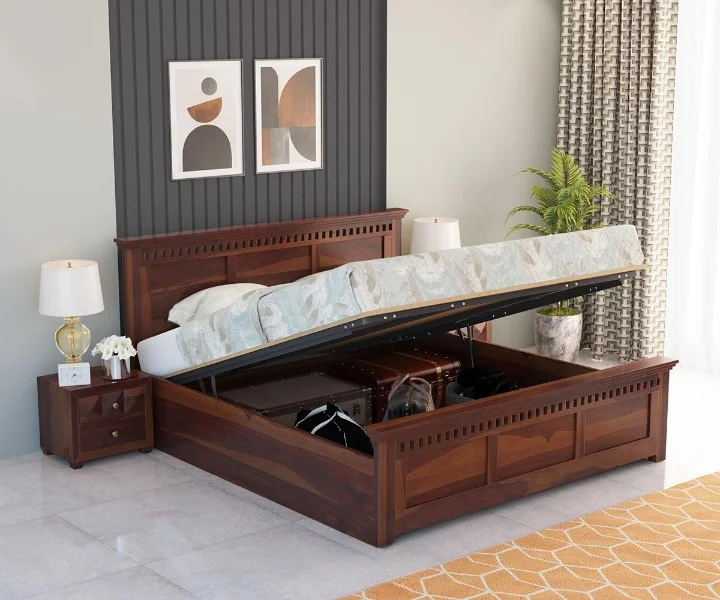
A standard queen bed occupies roughly 38.5 sq ft. Adding a chest of drawers beside it increases the footprint while providing limited additional capacity.
A storage bed keeps the same basic sleeping footprint while creating a large compartment underneath. Hydraulic mechanisms make lifting the mattress easier, allowing regular access to bedding, seasonal clothes, luggage and other items.
This makes a hydraulic model one of the most practical choices among space saving furniture for small bedroom layouts.
Solid wood construction also deserves attention. Storage beds experience repeated movement around hinges and lifting mechanisms. A strong frame provides better support for regular use. Sheesham wood remains a popular option in Indian homes because of its strength, natural appearance and long service life.
Sliding wardrobes vs. hinged wardrobes: the hidden cost of door swing
Wardrobe doors influence bedroom space more than many homeowners expect.
A hinged wardrobe requires open space in front of its doors. A 24 to 36 inch clearance may remain blocked each time the doors open. That area cannot comfortably hold a chair, basket or other furniture.
Read More: Sliding or Hinged Door Wardrobe: Which Wardrobe is Best? | Gadwal
At the same 6 ft width, that difference works out to roughly 17 sq ft of floor space reclaimed, space that’s functionally “invisible” until you calculate it, because it doesn’t look occupied, it’s just permanently unusable. For a bedroom under 110 sq ft, that’s often enough to fit a compact desk or a reading chair that otherwise wouldn’t have room.
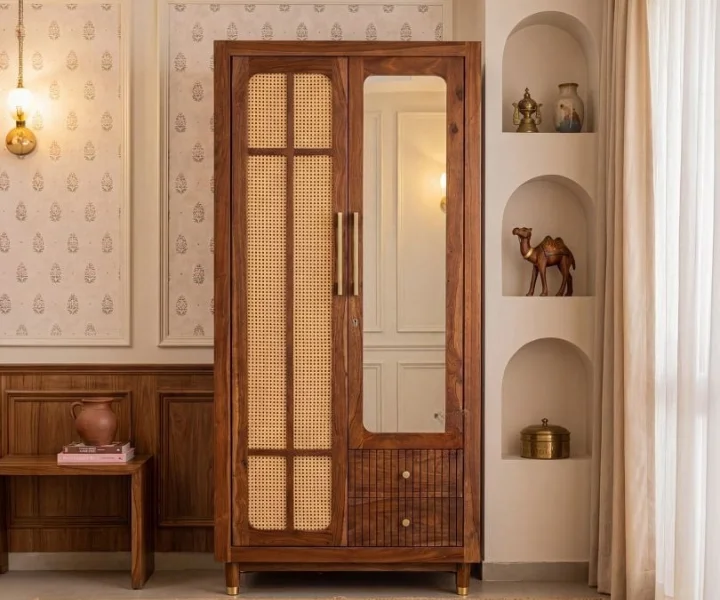
A sliding wardrobe for small bedroom layouts removes much of this issue. The panels move sideways along the wardrobe instead of opening into the room.
A six-foot wardrobe could reclaim a significant amount of functional floor area through this design change. The difference becomes especially noticeable in bedrooms measuring close to 100 sq ft.
Sliding wardrobe vs hinged wardrobe
The choice depends on room dimensions and storage habits.
Sliding wardrobes suit narrow rooms because the doors do not project into the walking area. Their clean front also gives compact bedrooms a less crowded appearance.
Hinged wardrobes offer wider access to the interior because each door opens separately. They also work well in rooms with sufficient clearance and shorter wardrobe walls.
Sliding systems require suitable wall width and properly maintained tracks. Hinged designs need enough open space in front. Comparing these points before purchasing helps create a more comfortable layout.
Wall-mounted furniture: the only genuinely “zero-footprint” option
Floor space becomes extremely valuable beside the bed. Traditional bedside tables may occupy around 2 sq ft or more, even though many people only need room for a phone, lamp, glasses and a book.
A wall mounted bedside table moves that function away from the floor. A floating bedside table creates a clean visual effect while leaving the area underneath open.
This arrangement makes cleaning easier and gives the room a lighter appearance. Wall-mounted shelves also work well in bedrooms that need compact bedroom storage solutions.
Strong wall anchors and suitable hardware remain important, particularly with heavier wooden furniture. Concrete and brick walls require different fixing methods than drywall, so the mounting system should match the wall construction.
Multi-functional furniture: getting two rooms’ worth of function from one footprint
Compact bedrooms benefit from furniture that serves more than one purpose. A bed with built-in drawers, a study desk with shelving, or a wardrobe with integrated storage can reduce the need for separate pieces.
Children’s bedrooms and student rooms benefit particularly well from this approach. A loft-style bed with a desk underneath combines sleeping and study functions within one vertical arrangement.
Bench seating with hidden storage also provides a practical place to sit while keeping smaller belongings organised.
These small bedroom furniture ideas work best when each piece has a clear daily purpose. Filling the room with multifunctional products that rarely get used can create a different type of clutter.
Quick reference: what to prioritize by room size
| Bedroom carpet area | Highest-impact space-saving choice | Second priority |
| Under 100 sq ft | Sliding wardrobe (reclaims the most floor area of any single swap) | Storage bed |
| 100–130 sq ft | Storage bed (best storage-per-sq-ft for the bed’s own footprint) | Wall-mounted bedside unit |
| 130–150+ sq ft | Either works well; prioritize based on which you’re short on — clothes storage or general storage | Multi-function desk/bed combo for a shared-use room |
Homes with very limited floor space should focus on bedroom furniture for small rooms that use vertical or hidden storage.
A compact wardrobe with sliding doors works well along a long wall. A storage bed handles bulky items underneath the mattress. Wall-mounted bedside furniture preserves walking space around the sleeping area.
Final Thoughts
Smart furniture selection makes a small bedroom feel more open without sacrificing storage. The strongest choices usually combine hidden compartments, vertical storage and efficient opening systems.
A hydraulic storage bed uses the existing bed footprint for additional storage. A sliding wardrobe reduces door clearance. Wall-mounted bedside furniture keeps useful storage close without taking up valuable floor area.
Together, these choices create a practical setup for modern Indian homes. Gadwal Furniture offers solid wood furniture options that can suit different bedroom dimensions, making customised planning easier for compact spaces.
Frequently Asked Questions
Which furniture saves the most bedroom space?
Sliding wardrobes and hydraulic storage beds offer excellent space efficiency, combining generous storage with compact footprints. They are ideal choices for space saving furniture for small bedroom layouts.
What are the storage benefits of hydraulic storage beds?
A hydraulic storage bed uses the unused area beneath the mattress for bedding, blankets, luggage and seasonal items, reducing the need for extra cabinets.
Sliding wardrobes vs. hinged wardrobes for small rooms
The sliding wardrobe vs hinged wardrobe choice depends on available floor clearance. Sliding models suit narrow rooms, while hinged designs require more space for door movement.
Is a floating bedside table suitable for a compact bedroom?
A floating bedside table keeps essentials such as books, phones and lamps within reach while freeing floor space, making it practical bedroom furniture for small rooms.
Which bedroom storage solutions work best in a 100 sq ft room?
Effective bedroom storage solutions include a hydraulic storage bed, sliding wardrobe and wall mounted bedside table, creating organised storage while preserving valuable walking space.
Is solid wood furniture suitable for space-saving bedroom furniture?
Solid wood suits space saving bedroom furniture because sturdy construction supports beds, wardrobes and storage mechanisms while providing durability for regular everyday use.
Note: Storage figures and floor-space estimates represent practical calculations based on commonly used bedroom furniture dimensions. Actual capacity varies by model, configuration, material and room measurements.
For more info, contact: support@gadwalfurniture.com
Follow our Instagram : Gadwal Furniture