Blog
Light vs Dark Wood Dining Tables: Which Is Best for Your Home?

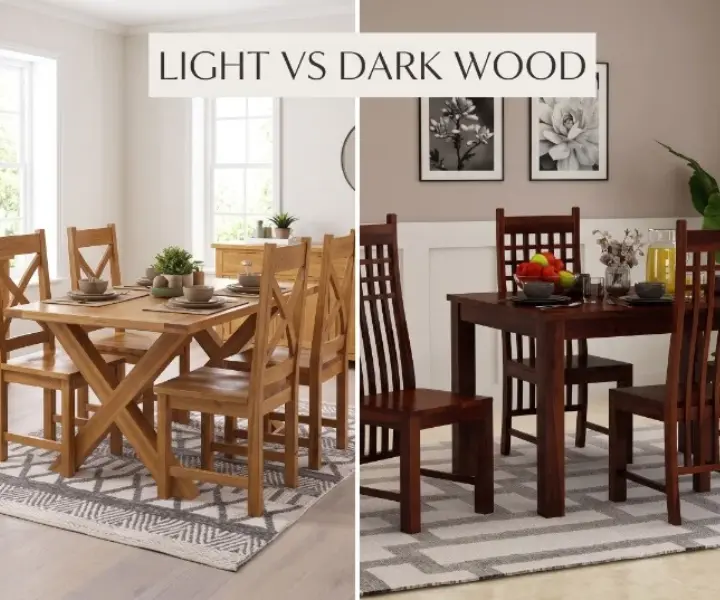
The dining table is the one piece of furniture everyone ends up at. It might be chai on a slow Sunday, homework at 6 pm or a loud festival lunch with the whole family. So it’s worth thinking about properly, and the first thing that trips most people up is the finish. Do you go light and golden, or deep and dark?
Honestly, both look great, and neither wins in every home. What matters is your room, your light, your walls and how your family actually eats. In many Indian homes, it also matters how much turmeric and oil is going to land on that surface.
Here’s how the two compare, in plain terms. Our examples use solid sheesham, a very common dining table wood in India that comes in finishes from honey to walnut.
The quick answer
If your dining area is small or dim, go light or honey. If your room is bright and roomy and you want a richer, more formal feel, go dark or walnut. If you can’t decide, a mid-tone like teak or honey sits happily in almost any room, and you can add contrast with chairs or a rug.
One thing to know before you agonise: the colour doesn’t change how strong the table is. It’s the same solid wood underneath, with a polish on top. You’re choosing a look, not a quality level.
What “light” and “dark” mean in practice
Makers name finishes differently, so here’s a rough map.
- Light: natural, honey and pale oak tones, where the grain really shows.
- Mid-tone: teak and medium brown, which sit comfortably in between.
- Dark: walnut, espresso and deep brown, where the grain turns quieter and the table feels heavier and richer.
Sheesham is usually offered in honey, teak and walnut.
Light wood tables
The best thing about a light table is what it does to a room. It bounces light around, so a small dining corner feels bigger and friendlier. If your dining space shares a wall with the living room, or it’s tucked into a narrow flat, that effect is worth a lot.
Light finishes also let sheesham’s grain do its thing. Every piece has its own streaks and swirls, and a honey polish shows them off. If you buy wood because you enjoy looking at wood, this is the finish for you.
There’s a practical bonus, too. Fine scratches and a light film of dust tend to disappear into a pale surface, where they’d be obvious on a dark one. Light wood is also easygoing about style. It sits comfortably in a modern flat, a boho room or a traditional home, and it doesn’t fight with colourful cushions or curtains.
The catch is stains. Turmeric, tea, curry and oil can leave visible marks on a light surface if you leave them, and water rings and heat marks show clearly. A good polish gives you a head start, but you’ll need to wipe spills quickly. Some people also find a very light table a bit casual for a formal dinner.
Dark wood tables
A dark table makes a statement. In a dining room with brass lamps, carved chairs or a deep-coloured wall, walnut looks properly elegant, and it comes into its own at dinner parties and festival meals when the candles and diyas come out.
It’s also kinder to messy eaters. Spills and small marks blend into a dark finish far better than they do on a light one, which is a real comfort in a busy household. Against cream walls or a pale floor, a dark table gives you strong contrast and becomes the focus of the room.
The trade-off is a different kind of upkeep. Dust, lint and fingerprints show clearly on a dark surface, so you’ll reach for a cloth more often. Light-coloured scratches can stand out as well. And in a small or dim room, a dark table with dark chairs can feel heavy, because dark finishes soak up light instead of reflecting it.
Side by side
| Light or honey | Dark or walnut | |
|---|---|---|
| Overall feel | Open, warm, relaxed | Rich, formal, grounded |
| Small rooms | Usually the better fit | Needs good lighting |
| Dust | Hides it well | Shows it more |
| Stains | Shows them more | Hides them well |
| Scratches | Hides light ones | Light ones stand out |
| Grain | Very visible | More muted |
| Style | Modern, boho, casual | Classic, formal, traditional |
Which one for your room?
A small dining corner or flat. Go light or mid-tone. A honey table with lighter chairs keeps things open. If you love dark wood, bring it in through the chairs or a sideboard instead.
A big, bright room. You have freedom here, so choose on mood. Dark will look dramatic, and light will look warm and welcoming.
Not much natural light. Light or mid-tone usually works better, since it reflects what light there is. If you want dark anyway, put a good light fitting above the table.
Light walls and floors. A dark table stands out sharply, while a light one gives a soft, tone-on-tone look. Both work, so it depends which you prefer.
Dark walls or floors. A light or honey table stops the room feeling heavy. A dark table on a dark floor can disappear, though a rug underneath solves that.
Open-plan living and dining. Keep the wood tones in the same family as your sofa frame and TV unit. They don’t need to match, just to feel like they belong together.
Which one for your household?
Young kids. A mid or dark finish forgives a lot of mess, while light hides scratches better. Honestly, the quality of the polish matters more than the colour, so ask how it handles spills and heat. Rounded corners are a sensible choice around small children.
Heavy oil and masala cooking. If the table sees daily meals, lean towards a mid-tone or dark finish and use a runner or mats.
People who hate dusting. Light is easier to live with.
Frequent entertainers. Dark looks lovely by candlelight, and light feels cheerful and informal. Think about the mood you want your guests to walk into.
Renters, or anyone likely to move. A mid-tone like honey or teak is the safest pick, since it suits more rooms and is easier to resell.
Don’t forget the chairs
The chairs take up almost as much visual space as the table, so the pairing shapes the whole look.
- Matching table and chairs: a calm, cohesive feel and the easy choice in a small room.
- Dark table, lighter chairs: lifts the look and keeps the room from feeling heavy.
- Light table, dark chairs: adds contrast and grounds the table.
- Cane or upholstered chairs: soften a solid wood set and bring in colour and texture.
If you’re buying a set, look at how the table and chairs sit together in photos, and ask whether you can choose different finishes for each.
How to test a finish before you buy
Colour is the hardest part to judge online, and even in a showroom. A few habits help.
- Look in daylight. Showroom lights are often warm and bright, which can make finishes look richer or paler than they will at home. If you can, view the piece near a window.
- Ask for a finish sample or photos in natural light. A small wood swatch next to your wall paint tells you more than a catalogue image.
- Hold it against your floor and walls. The same honey can look golden next to a white wall and orange next to a beige one.
- Check the room at the time you eat there. If you mostly use the table in the evening under a yellow bulb, look at the finish under that light.
- Compare two finishes side by side. Differences are much clearer when you see honey and walnut together.
It’s a small bit of effort, and it prevents the most common regret, which is a table that looked right in the photo and wrong in the room.
The practical stuff that matters more than colour
Size. Leave about 36 inches (roughly 90 cm) between the table and the wall or other furniture, so chairs can slide out and people can walk behind. Our Elem Elegance 4 Seater Dining Table Set is listed with a 69 by 35 inch table, so it needs some breathing room. Measure the space before you fall for any table.
Shape. Rectangular tables suit long rooms and bigger families. Round ones fit small spaces, encourage conversation and have no corners to bump into. Our 2 Seater Solid Wood Dining Set is a compact round option for couples, available in honey, walnut and other finishes.
Build. Solid wood beats engineered board for strength and lifespan, and a scratched solid top can be sanded and refinished. Check the joints, wobble the legs and look at the thickness of the top. You’ll feel the difference every day.
Finish quality. A good polish protects the wood from spills and heat. Ask how it’s applied and what the warranty covers. Our listings, like the Wooden Dining Table 4 Seater in Sheesham Wood, spell out the size, finish and warranty so you can compare properly.
Price. Here’s a helpful detail: on several of our listings, honey and walnut cost the same. The Elem Elegance set, for example, is listed at ₹29,000 in both finishes, so you can choose on taste and not budget. Prices shift with sales, so check the current product page.
How finishes change over the years
A dining table isn’t frozen in time. Wood and its polish respond to light, heat and daily use, and it helps to know what to expect.
Strong, direct sunlight over many months can fade or dry a finish, and the part of the table nearest a window may end up a slightly different shade from the rest. That’s true of both light and dark tables, though on a dark finish the difference can be easier to spot. A curtain or sheer blind during the brightest hours makes a big difference.
Everyday wear tends to show up on the edges and the spots where people rest their arms. A light polish a few times a year keeps the surface even. And because it’s solid wood, a worn or scratched top can be sanded and refinished, even in a different tone, which is something you can’t do with a thin laminate. So the finish you pick today isn’t a life sentence.
Looking after your table, light or dark
Whichever you choose, the basics are the same.
- Dust with a soft dry cloth, going along the grain.
- Wipe spills quickly with a barely damp cloth, then dry the surface.
- Use coasters, trivets and placemats for hot dishes and drinks.
- Avoid harsh cleaners, bleach and abrasive scrubbers.
- Keep the table out of strong direct sun where you can.
- Polish lightly a few times a year, with a product suited to the finish.
A couple of small extras. On a light table, get to turmeric, tea and oil early. On a dark one, keep a soft cloth nearby for dust and fingerprints, and make sure it’s clean, because a gritty cloth leaves fine scratches that show up on dark wood.
Mixing light and dark
You don’t have to pick a side for the whole room. A light table with a dark sideboard, or the reverse, balances nicely. A dark rug under a light table adds contrast, and warm lighting overhead flatters both finishes. The only rule worth following is to keep to two or three wood tones in the room. Five different finishes just look accidental.
Mistakes people make
- Choosing from a showroom photo, when lighting changes how colour looks.
- Ignoring the room’s natural light.
- Forgetting the floor and wall colours.
- Skipping the measuring tape.
- Buying on looks alone, without checking the build, finish and warranty.
- Mixing too many woods.
- Expecting any finish to be maintenance-free.
Not sure? Ask yourself this
Is the dining area small or dim? Lean light. Do you want drama and formality? Lean dark. Do you cook with a lot of oil and spice? Lean mid or dark, and use mats. Hate dusting? Lean light. Love visible grain? Go honey or light. Still stuck? Choose a mid-tone, then add contrast with the chairs or a rug.
For more ideas, browse our living storage collection or the full range at Gadwal Furniture.
Frequently Asked Questions
Is a light or dark wood dining table better?
Neither wins everywhere. Light suits small, dim rooms and hides dust and scratches, while dark looks formal and hides stains. Pick based on your room, light and habits.
Which finish is best for a small dining room?
Light or honey usually works best, because it reflects light and keeps the space open.
Do dark tables show scratches?
Light-coloured scratches can stand out on a dark finish, though stains blend in. A good polish and careful use help either type.
Do light tables stain easily?
Turmeric, tea and oil can show more on a pale surface if left. Wipe them quickly and use mats. A good finish adds protection.
Does the finish change the price?
Not always. On several of our listings, honey and walnut cost the same, so check the product page.
What chairs go with a dark table?
Lighter or upholstered chairs lift the look, while matching dark chairs feel cohesive and formal. In a small room, lighter chairs help.
Can I mix light and dark wood?
Yes, as long as you keep the palette to two or three tones. A light table with dark chairs, or the other way round, can look great.
Can I change the finish later?
Solid wood can usually be sanded and refinished, so a change is possible, though it’s a job for a professional and not a weekend project.
Is sheesham good for a dining table?
Yes. It’s dense and strong and takes finishes from honey to walnut well. Like any wood, it needs protecting from heat, water and long hours of strong sun.
How big should a dining table be?
Leave about 36 inches of clearance around it. Measure the room and the table before you decide.