Blog
Ideal Desk Height for Comfortable Working: Complete Ergonomic Guide (2026)


Somewhere between the third video call of the day and the ache creeping into your shoulders, most people start blaming their chair. Or their mattress. Or just “too much screen time.” Rarely does anyone think to check the desk.
But here’s something worth sitting with for a second: many people assume back pain comes from sitting too long, but in many cases, the problem starts with a desk that’s too high or too low. Your body compensates in small, invisible ways, hunching a little, raising your shoulders a little, tilting your neck a little, and none of it feels dramatic in the moment. It just adds up, day after day, month after month.
If you’ve been working from a spare room, a dining table, or a study table you bought years ago without thinking too hard about it, this guide will help you figure out whether your setup is actually working for you, and what to look for if it’s time for a change.
What Is the Ideal Desk Height for Comfortable Working?
For most adults, the ideal desk height sits between 28 and 30 inches (71–76 cm) from the floor. This is the standard range used in most office and home furniture design, and it works reasonably well for people within the average height bracket, roughly 5’4″ to 5’10”.
That said, there’s no single “correct” number that applies to everyone. Desk height needs to work together with your chair height, your seating posture, and your own body proportions. Someone who’s 6’2″ and someone who’s 5’1″ shouldn’t be using the same desk height and expecting the same comfort yet a lot of standard furniture is built as if they should.
The real test isn’t the number on a spec sheet. It’s whether your elbows can rest at roughly a 90-degree angle while your forearms sit comfortably on the desk surface, without your shoulders creeping upward.
What Is a Good Height for a Work Desk?
Here’s a rough breakdown by height range:
Average adults (5’4″–5’10”): 28–30 inches (71–76 cm) generally works well.
Taller individuals (above 5’10”): You may need something closer to 30–32 inches, or a desk paired with a slightly higher chair and footrest if the desk itself isn’t adjustable.
Shorter individuals (below 5’4″): A lower desk in the 26–28 inch range, combined with a footrest, usually feels more natural and keeps wrists in a neutral position.
If you’re buying furniture for a shared home office, say, you and a partner with a noticeable height difference, an adjustable-height desk solves a lot of this. But if you’re going with a fixed-height wooden desk, which most Indian households prefer for durability and design, pairing it with the right chair height matters just as much as the desk itself.
Is 75 cm Too High for a Desk?
Not for most people. 75 cm (about 29.5 inches) sits right in the standard comfortable range and works well for adults of average height sitting in a standard-height chair. It only becomes “too high” if you’re on the shorter side and find your shoulders rising to reach the surface, or if your chair doesn’t let your feet rest flat on the floor when seated at that height.
Is 85 cm Too High for a Desk?
For a seated desk, yes, 85 cm (about 33.5 inches) is unusually tall for most adults and would typically force your shoulders up and your wrists into an awkward upward bend while typing. This height makes more sense for a standing desk setup, or for very tall individuals working with a proportionally higher chair. If your current desk is anywhere close to this and you’re sitting rather than standing at it, it’s worth measuring against your own elbow height to check.
Is It Better to Have a Desk That’s Too High or Too Low?
Neither is ideal, but they cause different problems, and it helps to understand both before deciding which trade-off is more manageable while you look for the right piece.
| Desk Too High | Desk Too Low | |
|---|---|---|
| Shoulders | Raised, tense | Rounded, slouched forward |
| Wrists | Bent upward while typing | Bent downward while typing |
| Neck | Often tilted up to see the screen | Tilted down, straining the upper spine |
| Back | Less slouching, but shoulder fatigue builds | Rounded back, lower back strain over time |
| Common cause | Desk paired with a low chair | Desk paired with a chair set too high, or a low desk itself |
If you had to choose between the two temporarily, a slightly lower desk is generally easier to compensate for, you can raise your chair or add a cushion. A desk that’s too high is harder to fix without raising the chair enough that your feet lose contact with the floor, which creates its own problems. But the real fix isn’t compensating either way, it’s getting the height right in the first place.
What Are the Signs Your Desk Is Too High?
- Your shoulders feel tense or raised by the end of the day
- Your wrists bend upward while typing instead of staying flat
- Your elbows sit higher than your desk surface, rather than level with it
- You notice neck discomfort from tilting your head up toward the screen
- You find yourself hunching your shoulders forward without realizing it
What Are the Signs Your Desk Is Too Low?
- You catch yourself slouching or leaning forward frequently
- Your shoulders round forward rather than staying relaxed and back
- Lower back discomfort builds up over the course of the day
- Your wrists bend downward while typing
- You feel like you’re constantly “reaching down” to your keyboard
If any of these sound familiar and the discomfort has been persistent rather than occasional, it’s worth checking in with a doctor or physiotherapist, furniture adjustments help a lot, but they’re not a substitute for professional advice if pain has become a regular pattern.
What Is the 20-8-2 Rule?
The 20-8-2 rule is a simple guideline for breaking up long stretches of desk work: for every 30 minutes, aim to spend roughly 20 minutes sitting, 8 minutes standing, and 2 minutes moving around. It’s not a rigid formula so much as a reminder that no desk height, however perfect, replaces the need to change position regularly. Even an ergonomically ideal setup can lead to stiffness if you’re locked in the exact same posture for hours without a break.
How to Choose the Right Study Table for Your Home Office
Once you know roughly what height range works for you, a few other things matter just as much when picking a study table:
Tabletop size — You need enough surface for a laptop or monitor, a notepad, and some breathing room, without the desk overwhelming a small room. Most home offices work well with a desk between 40–48 inches wide.
Storage — Drawers for chargers, files, and stationery keep your desk from turning into a dumping ground within a week.
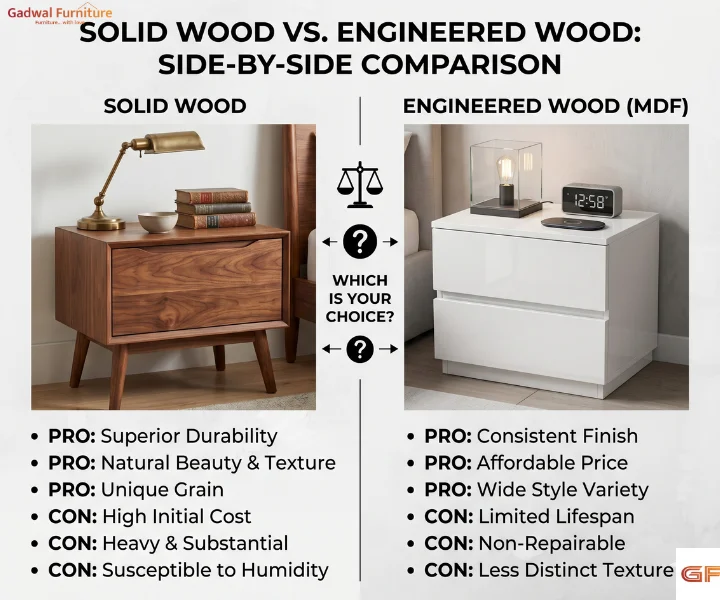
Material and build — This is where a lot of desks quietly fail people. Engineered wood or MDF options often look fine at first but tend to develop a slight wobble, chip at the edges, or swell in humid weather within a couple of years of daily use.
Workspace fit — Think about where the desk will actually sit near a window for natural light, close to a plug point, with enough room to push your chair back comfortably.
This is really where solid wood earns its reputation. A well-built wooden desk holds its shape and stability over years of daily use in a way that pressed wood alternatives usually can’t match, especially with India’s shifting humidity across seasons.
Why Solid Wood Study Tables Make Sense for Everyday Work
A desk you use every single day for years needs to handle more wear than furniture that’s used occasionally. Solid wood, Sheesham in particular, holds up well against humidity and temperature swings, doesn’t develop the hollow, flimsy feel that pressed wood eventually gets, and tends to age well rather than looking dated after a couple of years.
There’s also a craftsmanship element that’s easy to overlook. A solid wood desk built with proper joinery stays stable under regular use, no wobbling when you type, no drawers that stick after a few months. It’s a slower, more deliberate way to build furniture, but it shows in how the piece holds up over a decade rather than a couple of years.
Also Read: Best Home Office Furniture for Work From Home
Recommended Solid Wood Study Tables from Gadwal Furniture
If you’re currently looking to upgrade, here are a few options worth considering depending on your workspace and needs:
Solid Wood Aayushi Sheesham Wood Study Table — A well-balanced, mid-sized desk with two storage drawers. Ideal for anyone setting up a primary home workstation with a laptop and some paperwork, without needing a large room to fit it.
Solid Wood Archer Sheesham Wood Study Tables — A slightly larger surface with generous storage, better suited to people who need room for a dual-monitor setup or spread out physical documents while working.
Solid Wood Aurelia Sheesham Wood Study Table — A sturdier, more substantial build that works well as a dedicated office desk in a spare room, especially for long daily work hours.
Solid Wood Harris Sheesham Wood Study Table — A larger executive-style desk, well suited to professionals who need serious surface area and a more commanding presence for client calls or a home-based practice.
Solid Wood Lockies Sheesham Wood Study Table — A compact, minimalist design that fits neatly into smaller rooms or corners without feeling cramped, ideal for apartments with limited space.
Solid Wood Nettle Study Table Cum Shelf — Sized appropriately for students, with a design that supports good posture habits early on rather than forcing kids to adapt to adult-sized furniture.
Solid Wood Rivik Sheesham Wood Study Tables — Strong storage capacity built in, useful for anyone who needs to keep files, stationery, and equipment close at hand without cluttering the desktop.
Solid Wood Sinekha Sheesham Wood Study Table — A clean, modern silhouette that suits contemporary home interiors while still offering the stability of solid wood construction.
You can browse the complete range on our study tables collection, or see how a full desk setup comes together on our WFH Spaces page, which also covers bookshelves and office storage options to round out a home workstation.
Key Takeaways
- Ideal desk height for most adults is 28–30 inches (71–76 cm), but it depends on your own height and chair setup.
- A desk that’s too high raises your shoulders and bends your wrists upward; too low rounds your back and shoulders forward.
- Persistent pain is worth discussing with a doctor or physiotherapist — furniture adjustments help, but they aren’t medical treatment.
- The 20-8-2 rule is a useful reminder to break up long sitting stretches regardless of how well your desk is set up.
- Solid wood study tables offer better long-term stability and durability than engineered wood, especially for daily, years-long use.
Conclusion
Getting your desk height right isn’t about chasing a perfect number — it’s about paying attention to how your body actually feels after a few hours of work. Sore shoulders, aching wrists, or a back that won’t stop complaining are all worth listening to, and often the fix is simpler than people expect: a properly sized desk, paired with a chair that matches it. When you’re choosing a study table for your home office furniture setup, prioritize comfort and long-term build quality over how it looks in a photo. A desk you’ll be using every working day for years deserves that much thought.
Frequently Asked Questions
What is a good height for a work desk?
Most adults are comfortable with a desk height between 28–30 inches (71–76 cm), though taller or shorter individuals may need to adjust slightly above or below this range.
Is 75 cm too high for a desk?
No, 75 cm falls within the standard comfortable range for most adults of average height using a standard-height chair.
Is it better to have a desk too high or too low?
Neither is ideal, but a desk that’s too low is often easier to temporarily compensate for by raising your chair, while a desk that’s too high can force your shoulders and wrists into more strained positions.
Is 85 cm too high for a desk?
For seated work, yes — 85 cm is closer to standing-desk height and would likely be uncomfortable for most adults sitting in a standard chair.
What are signs of a desk being too high?
Raised or tense shoulders, wrists bending upward while typing, and neck strain from tilting your head up toward the screen are common signs.
What is the 20-8-2 rule?
It’s a guideline suggesting roughly 20 minutes sitting, 8 minutes standing, and 2 minutes moving for every 30 minutes of desk work, to avoid staying in one posture for too long.
What is the ideal study table height for students?
Student desks are usually shorter than adult desks, scaled to the child’s height, with a focus on keeping elbows level with the desk surface and feet flat on the floor or on a footrest.
How do I know if my desk is ergonomically correct?
Sit at your desk with your arms relaxed — if your elbows form roughly a 90-degree angle with your forearms resting comfortably on the surface, and your feet are flat on the floor, your setup is likely close to correct.
Does desk height affect posture?
Yes, significantly. A desk that’s mismatched to your height forces your shoulders, neck, or back to compensate, which over time contributes to poor posture and discomfort.
Which study table is best for working from home?
It depends on your space and needs, but a solid wood desk with adequate storage and a surface size suited to your setup — such as the Kuber or Scane study tables — works well for most home offices.
What is the standard height of a wooden study table?
Most standard wooden study tables in India are built between 28–30 inches (71–76 cm) high, matching general ergonomic guidelines for seated work.
Can the wrong desk height cause back pain?
Yes, an improperly matched desk and chair height is a common contributor to back, shoulder, and neck discomfort over time, though persistent pain should also be evaluated by a healthcare professional.
Should my chair or desk be adjusted first?
Generally, adjust your chair first so your feet are flat on the floor and knees are at roughly 90 degrees, then check whether your desk height allows your elbows to rest comfortably at the same 90-degree angle.
How much legroom should a study table have?
Enough for you to sit with your knees comfortably under the desk without hitting drawers or support beams — typically at least 20–24 inches of clear vertical and horizontal space beneath the surface.
Is a solid wood study table better for long working hours?
Solid wood tables tend to offer more stability over years of daily use, without the wobbling or surface wear that engineered wood options can develop, making them a practical choice for long-term, everyday work.
What size study table is best for a home office?
A desk between 40–48 inches wide generally works well for most home offices, offering enough surface for a laptop or monitor setup without overwhelming the room.
For more info, contact: support@gadwalfurniture.com
Follow our Instagram : Gadwal Furniture