Blog
How to Remove Water Stains from Wooden Furniture

Most guides on this topic hand you the same five kitchen hacks in the same order, mayonnaise, an iron, baking soda, and hope you land on one that works. None of them tell you why a method that fixes one table does nothing on another, or why the exact same glass of water can leave a mark that wipes away in thirty seconds on one piece of furniture and a permanent dark ring on another.
The real answer is that the finish under the stain, and how far the water actually traveled, decide almost everything about how the stain behaves and what will remove it. Once you know those two things, you are not guessing between five random remedies, you are picking the one that matches the actual damage.
What is really happening when wood “stains” from water
Every water mark on furniture falls into one of two categories, and they are not the same problem at all.
A white or cloudy mark means water vapor got trapped between layers of the finish, or inside a wax topcoat, without ever touching the bare wood underneath. The wood itself is untouched. This is a finish problem, not a wood problem, and it is almost always fixable without sanding.
A dark brown or black mark means water made it past the finish and soaked into the wood fibers. In many hardwoods, including Sheesham (Indian rosewood), this darkening is often a chemical reaction rather than plain discoloration, natural tannins in the wood react with trace iron, either from tap water, an old nail, or a metal object left sitting on the surface, to form a dark iron tannin stain. This is the same chemistry behind old ink stains on oak furniture. It is a wood level problem, and surface tricks like heat or oil will not touch it.
Knowing which one you are dealing with tells you which entire toolkit to reach for, before you try a single remedy.
Which finishes stain fastest (and which are hardest to fix once they do)
This is the part most guides skip entirely, and it matters more than any individual removal trick. Finishes are not equally vulnerable to water, and, counterintuitively, the finishes that resist water the longest are often the hardest to repair if they do eventually mark.
Based on documented differences in how each finish type reacts with moisture, here is how common furniture finishes compare, ranked from most easily marked to most resistant:
| Finish type | How easily it marks | How easily a mark can be spot fixed |
|---|---|---|
| Wax or oil topcoat | Marks quickly, sometimes within minutes of standing water | Very easy, a fresh coat of wax or oil usually blends the mark away |
| Shellac | Marks fairly easily from both water and heat | Easy, shellac redissolves in its own solvent so marks can be padded out and reblended |
| Water based lacquer | Can turn cloudy or “blush” in humid conditions or with standing water | Moderate, often responds to gentle heat or solvent based touch up |
| Oil based lacquer or nitrocellulose | More resistant than water based lacquer | Moderate, also redissolves in its solvent, so touch up is usually possible |
| Water based polyurethane | Fairly resistant, but not immune to heat and prolonged contact | Harder, polyurethane cures into a fixed layer and does not redissolve |
| Oil based polyurethane or catalyzed varnish | Most resistant, can often withstand hours of standing water | Hardest, if it does mark, the layer usually cannot be spot repaired and the section may need full sanding and refinishing |
The practical takeaway: a highly water resistant finish is genuinely good insurance against everyday spills, but it is a poor bet against a plant pot left sitting for a week, because there is no gentle fix available once it does fail. A more repairable finish like shellac or wax trades a bit of everyday resistance for being far easier to bring back to new.
A simple way to diagnose your stain before you touch it
Before reaching for any remedy, run through three quick checks. Together they tell you which category of fix you actually need.
Color of the mark. White or cloudy points to a finish level problem. Dark brown or black points to a wood level problem that surface remedies will not solve.
How long the moisture sat there. A fresh spill wiped up within minutes is far more likely to be trapped only in the topcoat. Anything left for days, like a plant pot, a wet towel, or a leaking vase, has had time to work past the finish, especially on wax, oil, or shellac surfaces.
What touched the surface. A plain glass of water is unlikely to cause a dark stain on its own. A metal object, a vase with a metal base, or tap water with a higher mineral content is far more likely to produce the iron tannin reaction that causes dark marks, particularly on tannin rich woods like Sheesham, oak, and walnut.
If the answers point to “white, fresh, no metal involved,” a gentle finish level fix will almost certainly work. If they point to “dark, long standing, or metal was involved,” skip straight to the wood level fix below and save yourself the time of trying methods that were never going to work on that kind of stain.
Fixing white or cloudy stains (finish level fix)
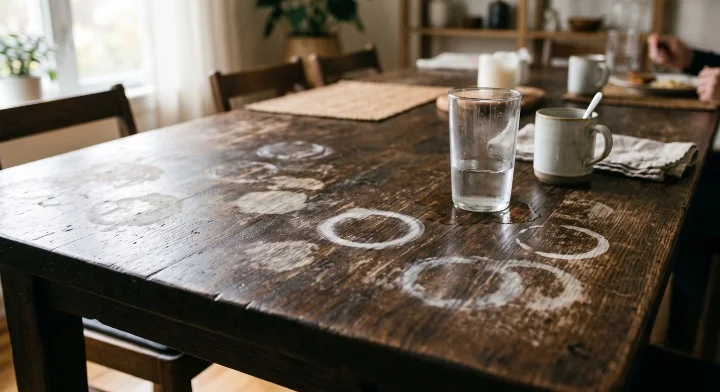
These methods work by drawing trapped moisture back out of the finish, and they get progressively more aggressive.
Start with gentle heat. A hair dryer on medium heat, held a small distance from the surface and kept moving constantly for a couple of minutes, drives residual moisture out of many finishes, especially shellac and lacquer. This is the least invasive option and worth trying first on any fresh white mark.
Move to an oil based paste if heat alone does not clear it. A thin, even layer of a mild oil, left to sit for a few hours and then buffed off with a soft cloth, works by displacing the trapped moisture. This tends to work best on wax and oil finishes, where the mark is sitting in the topcoat rather than a cured plastic layer.
Use a mild abrasive paste for marks that do not respond to the above. A soft paste applied gently along the direction of the grain, then wiped clean and followed by furniture polish, can lift moisture that has partly dried into the finish. This step carries slightly more risk of dulling a glossy finish, so test it on a hidden edge first, and treat it as the option for marks that have had a week or two to set rather than same day spills.
If none of these clear a supposedly white mark, it is worth reconsidering the diagnosis. A stubborn “white” mark on a water based finish that will not shift with any of the above sometimes means the water has actually reached the wood underneath a porous or worn finish, in which case the wood level fix below is the next step.
Fixing dark or black stains (wood level fix)
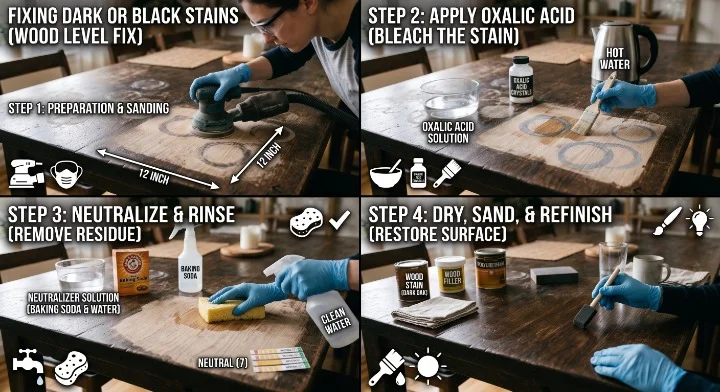
Once water has reacted with the wood fibers themselves, surface remedies will not reach the discoloration, because the color change is happening below the finish, not within it.
Oxalic acid, sold as wood bleach, is the standard tool for this.
It specifically targets the iron tannin reaction that causes most dark water stains, and, unlike a full bleaching agent, it restores the wood toward its natural color rather than lightening it artificially. Using it correctly means stripping the existing finish from the affected area first, since oxalic acid needs direct contact with bare wood to work. It is mixed with hot water, applied liberally to the stain, left to dry back into a light crystal residue, then rinsed thoroughly and neutralized before any new finish is applied. Because it is a genuine acid, it needs to be handled with rubber gloves, eye protection, and good ventilation, and it should never be mixed with any other cleaning chemical.
For a small, localized mark, light sanding down to bare wood, followed by spot refinishing, is often simpler than bleaching and avoids introducing a chemical process to a small area. This works well when the stain has not spread far and the surrounding finish is otherwise in good condition.
If the stain covers a large area or keeps recurring in the same spot, it usually means water is getting in from an ongoing source, a windowsill leak, a plant that gets overwatered, or condensation from an AC unit, rather than a one time spill, and treating the surface again will only be a temporary fix until that source is addressed.
Preventing the next one
The single biggest prevention factor, based on everything above, is matching how you use a piece of furniture to how forgiving its finish actually is. A dining table that sees daily glasses and hot dishes benefits from a more water resistant finish even though repairs are harder if it ever does fail, while a piece that mostly holds decorative items benefits more from an easily repairable finish like wax or shellac, since any rare mark is simple to fix.
Beyond that, the basics still matter: use coasters and trivets, wipe up any spill as soon as it happens rather than after it evaporates on its own, and keep metal objects like vases, trays, and decor pieces off bare wood surfaces for extended periods, since that is the specific combination that produces the harder to fix dark stains.
Also read
Understanding your finish also helps you maintain it before stains ever become a problem. See How to Polish Sheesham Wood Furniture at Home Naturally for natural upkeep methods that keep the finish itself in good condition.
Water damage and pest damage often get treated as separate problems, but both come down to protecting solid wood over time. See New Home Furniture Checklist 2026: Essential Furniture for Your First Home for the other major long term threat to watch for.
If you are weighing how much furniture upkeep is worth it in the first place, see Is Solid Wood Furniture Sustainable? What Indian Buyers Should Know for how repairability and lifespan factor into that decision.
This guide is based on documented properties of common wood finishes and established wood chemistry (including the iron tannin reaction behind dark water stains). It is general guidance, not a lab test of any specific piece of furniture. Always test a removal method on a hidden area first, especially on antique or high value pieces.
FAQs
What causes a white ring on wood furniture?
A white ring forms when moisture becomes trapped between layers of the finish or inside a wax topcoat without reaching the bare wood underneath. It is a finish level issue, not permanent wood damage, and is usually fixable with gentle heat or an oil based treatment.
Why did a water stain turn black instead of white?
A black or dark brown stain usually means water reached the wood fibers themselves and reacted with natural tannins in the wood, often triggered by trace iron from tap water or a nearby metal object. This reaction is common on tannin rich woods like Sheesham, oak, and walnut, and needs a wood level fix such as oxalic acid bleach rather than a surface remedy.
Does the type of wood finish affect how easily a water stain forms?
Yes. Wax, oil, and shellac finishes tend to show water marks the fastest but are also the easiest to repair, since they can be reblended or redissolved. Polyurethane and catalyzed varnish finishes resist water far longer, but if they do eventually mark, the damaged section usually cannot be spot repaired and needs full sanding and refinishing.
Is oxalic acid safe to use at home?
Oxalic acid is effective and widely used for dark water stains, but it is a genuine acid and needs to be handled carefully, with rubber gloves, eye protection, good ventilation, and never mixed with other cleaning chemicals. For antique or high value furniture, it is worth testing on a hidden area first or consulting a professional.
Can a water stain on solid wood furniture always be fixed without refinishing?
Not always. White or cloudy marks caught early can usually be fixed without refinishing. Dark stains that have penetrated the wood, or any mark on a finish that has already failed in that spot, often need at least a small section of sanding and spot refinishing to fully resolve.
Is Sheesham wood more prone to water stains than other woods?
Sheesham is a dense hardwood with natural tannins, similar in that respect to oak or walnut, so it can develop the same iron tannin dark staining reaction if water and a metal object combine on its surface. This makes it slightly more prone to dark stains specifically, though its density and natural oil content generally make it fairly resistant to everyday moisture when properly finished and maintained.
For more info, contact: support@gadwalfurniture.com
Follow our Instagram : Gadwal Furniture